Bass
Subwoofer placement and setup: position, crossover frequency and phase
Is the bass booming, or missing altogether at the sofa? It usually comes down to the position and three controls. Here is how to find the right spot for the subwoofer and set crossover frequency, phase and level correctly.
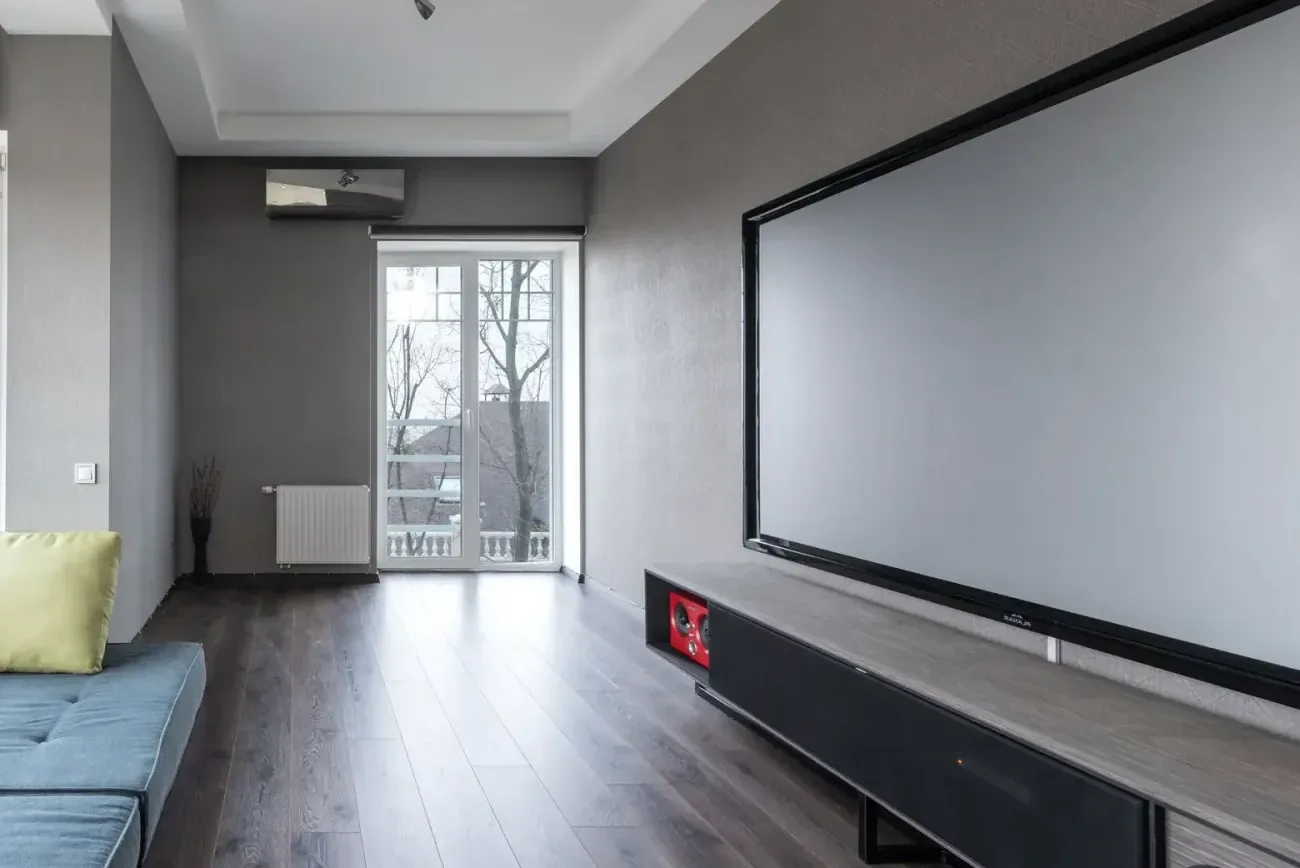
A subwoofer shouldn't stand out. It is well set up when the bass seems to come from the main speakers and you only miss it once it is switched off. That takes the right position and three settings.
Why is the position so important?
Low notes have long waves, and in a living room these only fit cleanly into the room at certain points. In some places individual notes reinforce each other and boom, in others they almost cancel each other out. If you move the subwoofer by half a metre, the bass at the sofa can change noticeably. That's why the position matters more than the device.
Where is the best position?
A few basic rules:
- In the corner the bass is loudest, but often also at its least clean.
- Against a wall, moved a little out of the corner, it is usually more balanced.
- Between the front speakers or right next to them, the bass blends into the overall sound most easily.
- A closed cabinet is not a good place. The furniture vibrates along with it.
The most reliable method is a simple experiment: put the subwoofer at your listening position, so on the sofa or in front of it. Play a track with continuous bass and crouch down at the spots where the subwoofer could stand later. Where the bass sounds most even and tightest is the right place.
Which crossover frequency should I set?
The crossover frequency determines up to which pitch the subwoofer plays and where the main speakers take over.
- Starting point: 80 hertz. Most combinations work with this.
- Small speakers and satellites: higher, around 100 to 120 hertz, because they reproduce hardly any bass themselves.
- Large floorstanding speakers: lower, around 60 hertz.
If you set the crossover in the AV receiver, turn the frequency control on the subwoofer all the way up or choose the "LFE" input. Otherwise two devices filter one after the other, and a hole appears in the sound. With a soundbar and its matching subwoofer, the crossover is fixed.
What does the phase switch do?
In the crossover range, subwoofer and main speakers should move together and not against each other. The test is simple: play music with strong bass, sit at the listening position and have someone flip the switch between 0 and 180 degrees. The position in which the bass sounds fuller and louder is the right one. With a continuously variable control, you look for the position with the strongest bass in the same way.
How loud should the subwoofer be?
Quieter than most people set it. Turn the level down until you no longer hear the subwoofer as a separate source. The bass should carry the sound and not sit on top of it. Male voices are a good test: if the voices sound boomy and bloated, the subwoofer is too loud or the crossover frequency too high.
What does automatic calibration achieve?
AV receivers and many soundbars measure the room with a microphone and compensate for level, distance and the strongest booming frequencies. That is worthwhile, but it doesn't replace a good position: calibration can lower exaggerated notes, but it can't bring back a note that has been cancelled out. So find the position first, then calibrate. The article Placing speakers shows how else the room shapes the sound.
Is a second subwoofer worth it?
If several seats should sound good, yes. Two subwoofers in different places excite the room more evenly. This doesn't make the bass louder, but more similar across the whole sofa. Two smaller subwoofers are often a better choice for this than one large one.
And the neighbours?
Bass goes through walls and ceilings. Three things help in a flat:
- Decouple the subwoofer from the floor with feet or a slab, especially on parquet and wooden floors.
- Use the night mode of the receiver or soundbar. It keeps explosions quieter and dialogue intelligible.
- Save the level for the evening as a separate setting.
Conclusion
First the position, then crossover frequency, phase and level, and calibration at the end. In this order, booming turns into bass that is simply there.
More on this: home cinema sound and hi-fi.

In person
Philip Fiumi
Managing Director
Questions about Home cinema?
Write or call. We’ll advise you with no obligation and get back to you within one working day.
More articles
News
The stereo system today: what a good music system needs
Two speakers and an amplifier are enough for music that moves you. Which three routes there are today, where the budget achieves the most and how to bring an older system into the streaming age.
In-ceiling and in-wall speakers: planning, installation and sound
Music in the kitchen, bathroom and living room without a speaker standing around. Which types of built-in speakers there are, where they belong, what matters behind the ceiling and when you need to plan them in.
Soundbar or system: what the living room really needs
A soundbar is connected in ten minutes; a system with amplifier and speakers sounds better. When which solution fits, and what lies in between.