Room acoustics
Placing speakers: why the room is half the system
The same speakers sound completely different in two living rooms. What placement, furniture and a few simple rules do – without renovation.

The most expensive mistake in the audio world is ignoring the room. A middling speaker in a good room beats a very expensive one in a bad room. The good news: most improvements cost nothing but an afternoon.
The stereo triangle
Two speakers and the listening position form an equilateral triangle: the distance between the speakers equals the distance to the ear. Angle the speakers slightly towards the listening position, tweeters at ear height. That is the foundation for a soundstage in which the singer stands in the middle and does not come out of two boxes.
Distance from the wall
Every speaker needs air. Close to the wall the bass becomes thick and boomy, in the corner doubly so. As a starting point, 40 to 60 centimetres from the rear wall; bookshelf speakers on a shelf are a compromise you balance with a little less bass at the amplifier. Speakers with a rear bass reflex port react more sensitively than those with a front port or a sealed cabinet.
The subwoofer
Its place is not the corner it fits into but the spot where the bass is even. An old trick: put the subwoofer on the listening position, play bass, walk around the room and place the subwoofer where it sounds best. Two small subwoofers are more even than one big one.
Reflections
Hard surfaces throw the sound back and smear the image. The most important spots are the side walls between speakers and listening position, the floor in front and the wall behind the sofa. A rug, a curtain, a bookcase or a picture with fabric behind it work astonishingly well. Large glass surfaces are the most common challenge in modern living spaces; here curtains help more than any device.
Bass and the room
Low notes form standing waves in every room: spots where a note booms, and others where it is missing. That cannot be moved away, but it can be measured and compensated: room correction in the amplifier, soundbar or subwoofer measures with a microphone and corrects the worst spots. Sonos calls it Trueplay, Denon and Marantz Audyssey; Dirac is the benchmark.
Furniture and people
A sofa, books, plants and rugs are the best acoustic elements – an empty, echoing living room sounds bad with any system. And speakers do not belong in a closed cabinet: what you cannot see, you cannot hear either.
Built-in speakers
Speakers in wall and ceiling are invisible, but need a back box so that the cavity does not resonate and the neighbour hears nothing. The position is planned before the plasterer arrives – afterwards there is little room to manoeuvre.
What we offer
We place speakers on site, measure the room and set up the correction. Usually the result is better than swapping equipment, and considerably cheaper.
More articles
News
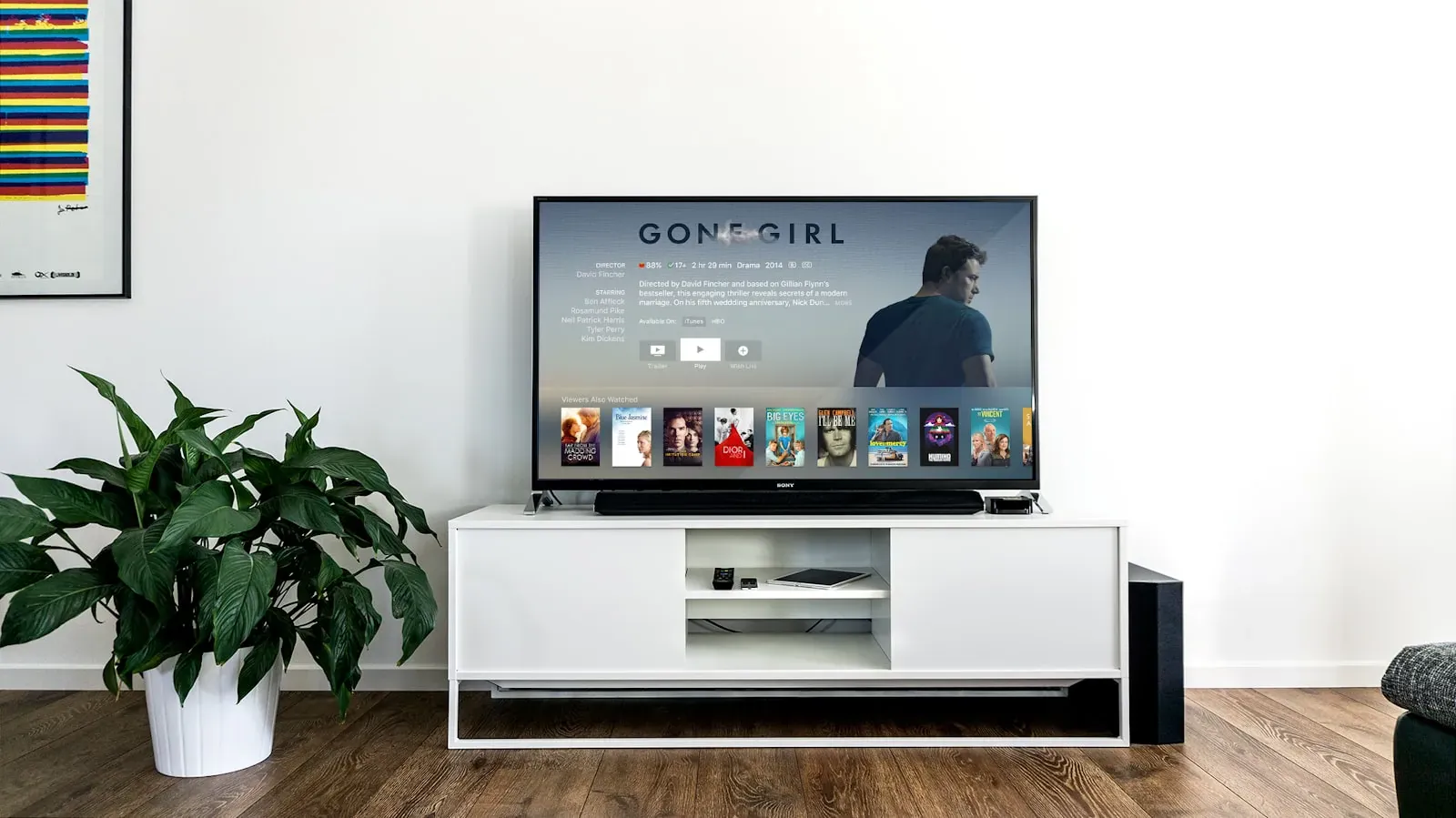
Soundbar or system: what the living room really needs
A soundbar is connected in ten minutes; a system with amplifier and speakers sounds better. When which solution fits – and what lies in between.

Music streaming in hi-fi quality: what you really hear
Spotify, Apple Music, Tidal, Qobuz or Amazon – the services advertise lossless and Hi-Res. What lies behind the formats, where the difference becomes audible and which route brings the music cleanly to the speaker.
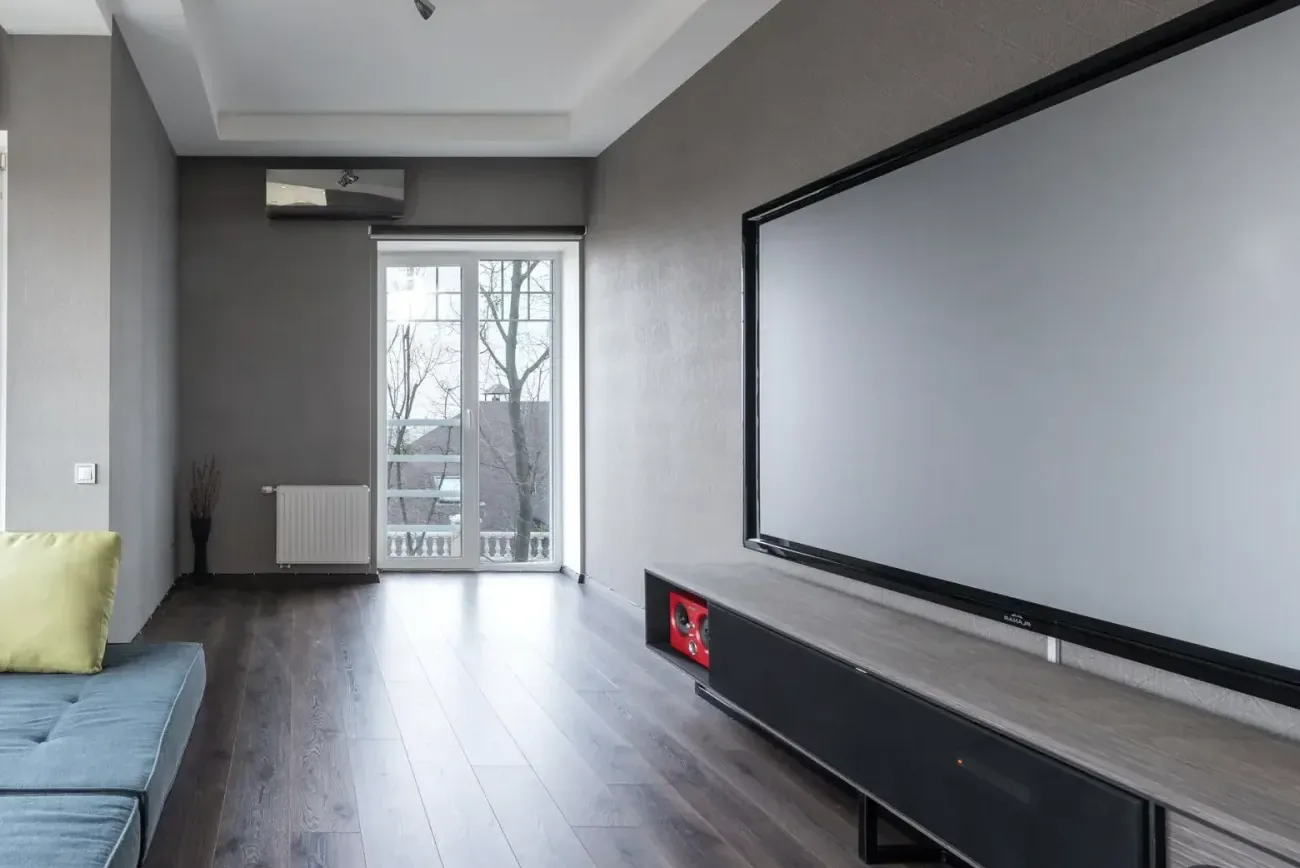
Atmos, eARC, codecs, watts: sound terms explained plainly
The audio world loves abbreviations. We explain the terms that come up most often in consultations – and which of them actually count when buying.