Planning
Where a smart home is possible: new build, renovation, older house
Every house can become intelligent – but not every one in the same way. What makes sense at which building phase, what the electrician needs to know and what can never be caught up on.
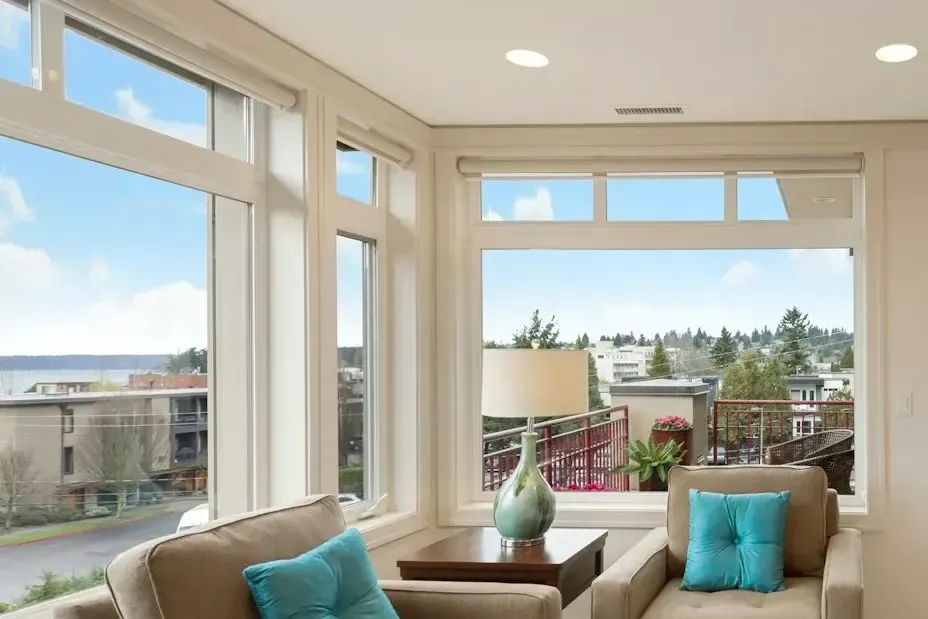
Whether a smart home is possible depends less on the age of the house than on the timing of the decision. Anyone who talks about it before the electrical plan has every option. Anyone who comes after plastering still has many – but different ones.
New build: everything open, nothing to catch up on later
In a new build, the electrical plan decides. Three things can never again be changed cheaply:
- The cable routing: lighting, blinds, heating and buttons star-wired to the distribution board, not from box to box. Only then can functions be freely assigned later.
- Empty conduits: into every room, to the façade, to the roof, into the garage. An empty conduit costs almost nothing, a cable in a finished house a great deal.
- The distribution board: big enough for actuators, server, network and spare capacity. Boards are almost always planned too small.
Add network in every room, a place for the router away from the cellar corner, power and data at the television, speakers and front door. The bus system itself – KNX, Loxone or a combination – is then a question of preference, not of possibility.
Renovation and refurbishment: the second chance
When walls are open, almost everything applies as in a new build. Often only part of the house is touched: the kitchen, the bathroom, one floor. Then a mix of bus in the renovated part and radio in the rest pays off. What matters is that both are controlled by the same hub, otherwise two houses emerge in one. With a heating refurbishment involving a heat pump, or a solar roof, the data connection to the smart home should be planned at the same time.
Older house without renovation: radio and terminals
Here we work with what is there. Relays behind the switches, radio blinds, thermostats on the radiators, lamps with Zigbee or Thread, a lock on the existing cylinder. The limits are set by the flush-mounted boxes, the mains and the WiFi. With a good hub, a home still emerges that controls lighting, heat and access automatically. What does not work: laying a cable where there is none.
Rented flat
Everything that manages without touching the installation is allowed: lamps, plugs, thermostats, sensors, a lock on your own cylinder. When you move out, everything comes with you. We have a separate article on that.
Who does what
In Switzerland, only a licensed electrical installer may work on the 230-volt installation. That is a good thing, and we work with the electrician you trust or with our partner companies. Our part is planning the functions, choosing the system, programming, the network and everything to do with television, music and operation. Best of all, everyone sits down at the table together once before the first chase is cut.
The roadmap
- Gather wishes: what should the house be able to do in five years?
- Check the electrical plan: star wiring, empty conduits, distribution board, network.
- Choose the system: bus, radio or both.
- Implement in stages: basic functions first, then layers.
- Set up and fine-tune: the first three months decide whether you like it.
More articles
News
From X10 to Matter: where the smart home comes from
The idea of a house that thinks along is fifty years old. A short history of home automation – from a Scottish plug socket to a common standard.
KNX explained: the standard that has held for 30 years
KNX is the bus system electrical planners in Switzerland rely on most often. How it works, what it costs and for whom it is the right choice.

Loxone explained: the smart home from a single source
One Miniserver, one manufacturer, one piece of software: Loxone promises home automation without a babel of protocols. What the system can do and where its limits lie.