Smart home
KNX explained: the standard that has held for 30 years
KNX is the bus system electrical planners in Switzerland rely on most often. How it works, what it costs and for whom it is the right choice.
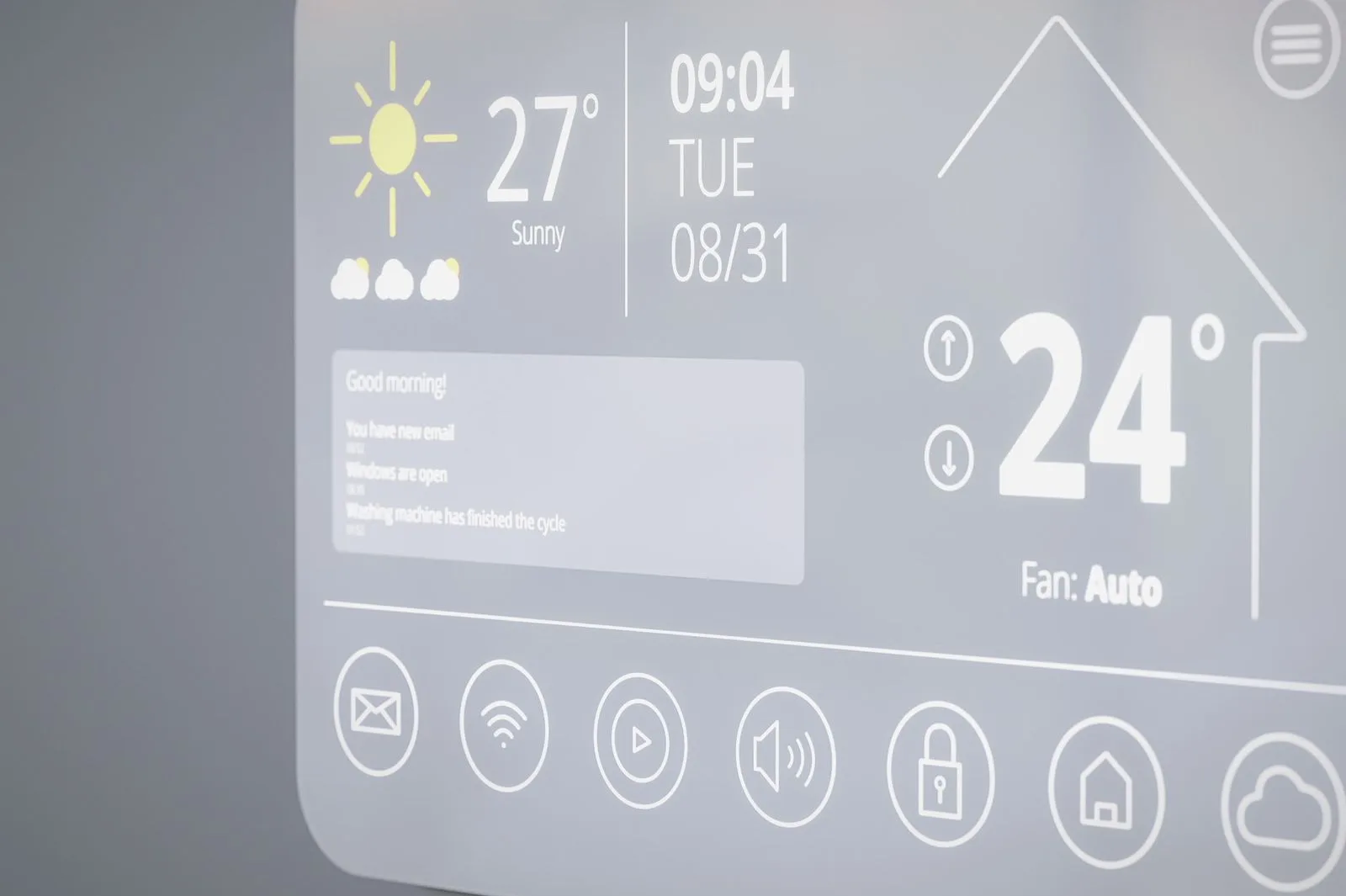
When a Swiss new build talks of an "intelligent electrical installation", it usually means KNX. The standard is more than thirty years old, supported by several hundred manufacturers and internationally standardised. That does not make it the most exciting system, but the most reliable.
How KNX works
Alongside the normal power cable, a second, green cable is laid: the bus. All participants hang on it – buttons, presence sensors, weather stations, actuators for lighting, blinds and heating. Every participant has its own address and its own small programme. When someone presses a button, it sends a telegram onto the bus; the responsible actuator reads it and switches. There is no central computer that could fail. If one device fails, all the others keep working.
The bus runs on extra-low voltage, so it may lie in the same conduit as the mains cable and is practically maintenance-free in operation. Besides the cable, KNX also exists over radio and over the network, so that retrofits and large installations can be covered as well.
Programming: the ETS
A KNX installation is configured with the ETS, the Engineering Tool Software of the KNX Association. Here the integrator defines which button switches which lamp, when the blinds move and how the heating responds. The ETS is the reason KNX is considered laborious: the software carries licence fees, and changes are usually made by the specialist company, not by the resident. In return, the installation is cleanly documented and can be taken over by any KNX integrator worldwide.
Strengths
- Manufacturer-independent: Feller, ABB, Siemens, Hager, Gira, Jung, MDT and many more work in the same installation.
- Decentralised: no central point of failure.
- Long-lived: devices from the nineties run in current installations.
- Suitable for large buildings as well as detached houses.
Weaknesses
- Higher price per function than radio solutions.
- Changes need the ETS and usually the integrator.
- An additional server is needed for app, voice control and remote access.
- Hardly retrofittable in older buildings without renovation.
What a KNX installation costs
An honest answer: more than a conventional installation, and the extra depends less on the standard than on the number of functions. Every dimmed lighting circuit, every motorised blind and every heating circuit is a channel, and channels cost. We therefore advise deciding first what the house should be able to do, and only then obtaining quotes. That way you compare performance, not brand names.
Who KNX suits
KNX is the right choice for new builds and comprehensive renovations where the cables are being pulled anew anyway – above all when the house is meant to stay as built for more than ten years. Anyone who wants to start quickly and cheaply, or who rents, is better served by radio solutions. And anyone who wants to link a KNX house to modern controls, voice control or multiroom audio will find good bridges today – we plan them with you.
More articles
News
From X10 to Matter: where the smart home comes from
The idea of a house that thinks along is fifty years old. A short history of home automation – from a Scottish plug socket to a common standard.

Loxone explained: the smart home from a single source
One Miniserver, one manufacturer, one piece of software: Loxone promises home automation without a babel of protocols. What the system can do and where its limits lie.

Matter: the standard everyone was waiting for
Since 2022 there has been a common standard for the smart home. What it delivers, what it cannot do and when it matters for you.