Google & AI
SEO, AEO and GEO: listed, answered, recommended
Three acronyms, three levels of visibility: appearing in the search results, providing the answer, being recommended by AI assistants. What SEO, AEO and GEO stand for and how they fit together.
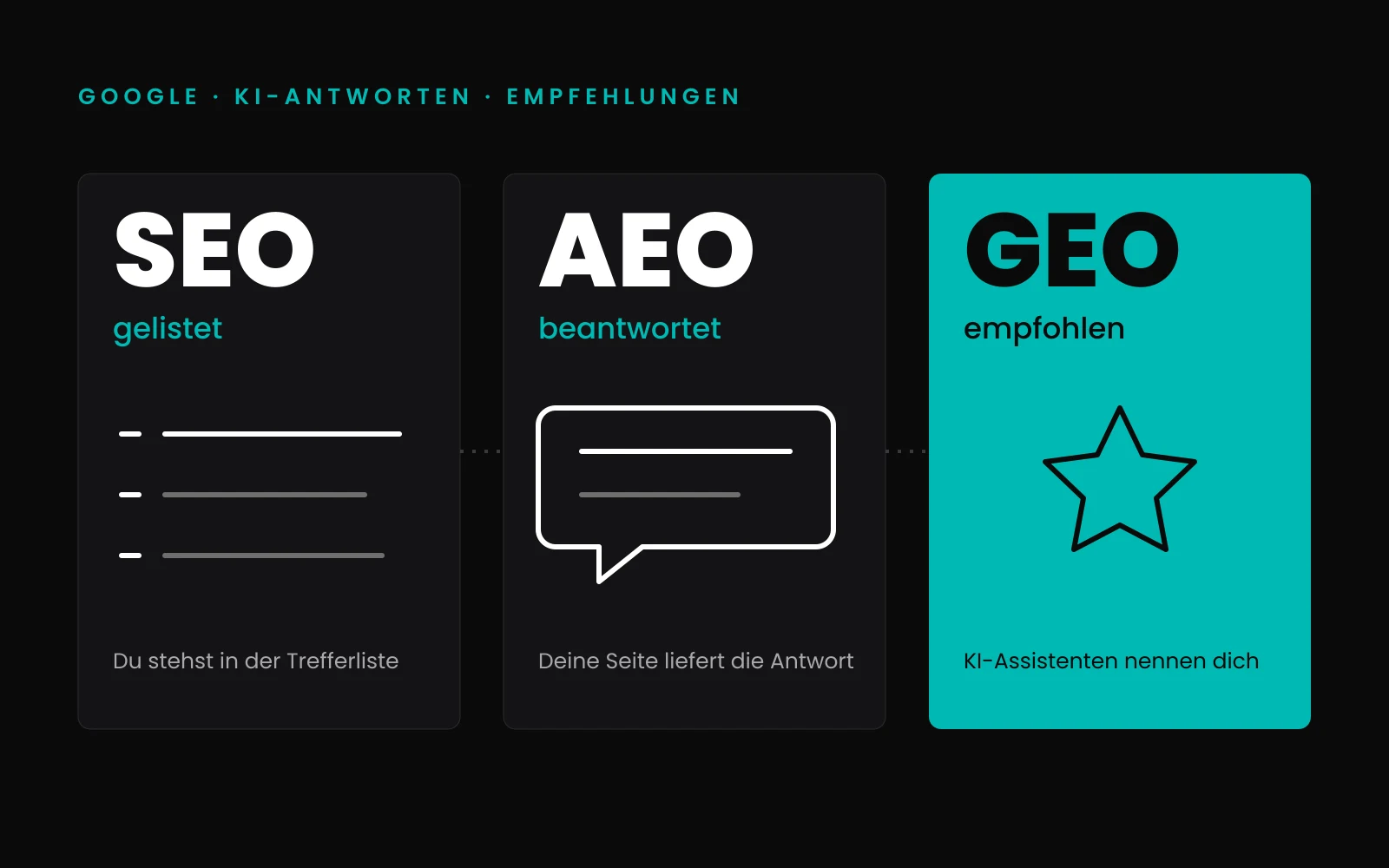
When you search for something today, you no longer get just ten blue links. For many questions, Google shows “AI Overviews” above the results, in Switzerland since March 2025. And more and more people ask ChatGPT, Gemini, Perplexity or Claude directly. For your business, this means there are now three levels at which people find you. Three acronyms have become established for them: SEO, AEO and GEO.
What is the difference between SEO, AEO and GEO?
| SEO | AEO | GEO | |
|---|---|---|---|
| Full name | Search Engine Optimization | Answer Engine Optimization | Generative Engine Optimization |
| Goal | appearing in the search results | providing the answer | being mentioned by AI assistants |
| Where it shows | Google results, Google Maps | AI Overviews, featured snippets, voice assistants | ChatGPT, Gemini, Perplexity, Claude |
| What counts | content, technical setup, backlinks | clear answers to real questions | facts that other sources confirm |
In short: with SEO, you are in the list. With AEO, your page provides the answer. With GEO, AI names you when someone asks for a recommendation.
SEO: still the foundation
Search engine optimisation makes sure that Google finds your pages, understands them and shows them for matching searches. This includes fast loading times, a clean structure, content on the questions your customers ask and links from other websites. For local businesses, there is also the Google Business Profile, because many searches end on the map.
SEO is also the basis for the other two levels. AI assistants that search the web rely on pages they can find and read. A page that Google does not know will struggle there too.
AEO: providing the answer
Answer Engine Optimization is about your page answering a question directly. Answer engines such as Google’s AI Overviews or voice assistants look for passages that answer a question clearly and completely.
What helps:
- At the start of every page, a short paragraph that answers the most important question, with location, figures and limits.
- Real questions from customer conversations as subheadings, each followed by two to four sentences of answer.
- Structured data based on Schema.org for the business, services and frequently asked questions.
- Tables and lists wherever there is something to compare.
GEO: getting recommended
Generative Engine Optimization targets AI assistants that write their own answers. If someone asks “Who does Digital Signage in Solothurn?”, the assistant puts the answer together from sources it considers reliable. The term GEO comes from a research paper from November 2023, with Princeton University among the institutions involved. It examined which content generative search engines are more likely to pick up and measured up to 40 percent more visibility with targeted adjustments.
What counts:
- Facts that read the same everywhere: name, address, services and figures on the website, in the Google profile and in directories.
- Outside evidence: reviews, references, mentions in the media and by partners.
- Clear authorship: who writes, who is behind it and how long the business has existed.
- Content that AI crawlers are allowed to read, instead of shutting them out in robots.txt.
Marketing language does not help here. If you call yourself the market leader without evidence, you will rarely be quoted when it is not written anywhere else.
Do you need all three?
Yes, but not as three separate projects. The levels build on each other: without SEO, nobody finds the page, without clear answers, there is nothing to quote, and without confirmed facts, there is not enough trust for a recommendation. In practice, it is one website that meets all three requirements.
How do you measure visibility in AI answers?
For SEO, there is Google Search Console with clicks, impressions and positions. For AEO and GEO, there is no comparable tool. A simple method has proven itself: every month, you ask the major assistants the same questions that potential customers would ask and note whether and how the business appears. Over a few months, you can see whether the measures are working.
Conclusion
SEO gets you into the list, AEO makes your page the answer, and GEO makes sure AI assistants recommend you. If you are working on your website today, you should keep all three levels in mind. Our article Visibility in AI answers shows what this looks like in practice.
More on this: Google optimisation and AI visibility.

In person
Philip
Managing Director
Questions about AI visibility?
Write or call. We’ll advise you with no obligation and get back to you within one working day.
More articles
News

Having a website built in Solothurn: how it works
Process, timing, system and Google: what to settle before you hire a web agency, with examples from our projects.
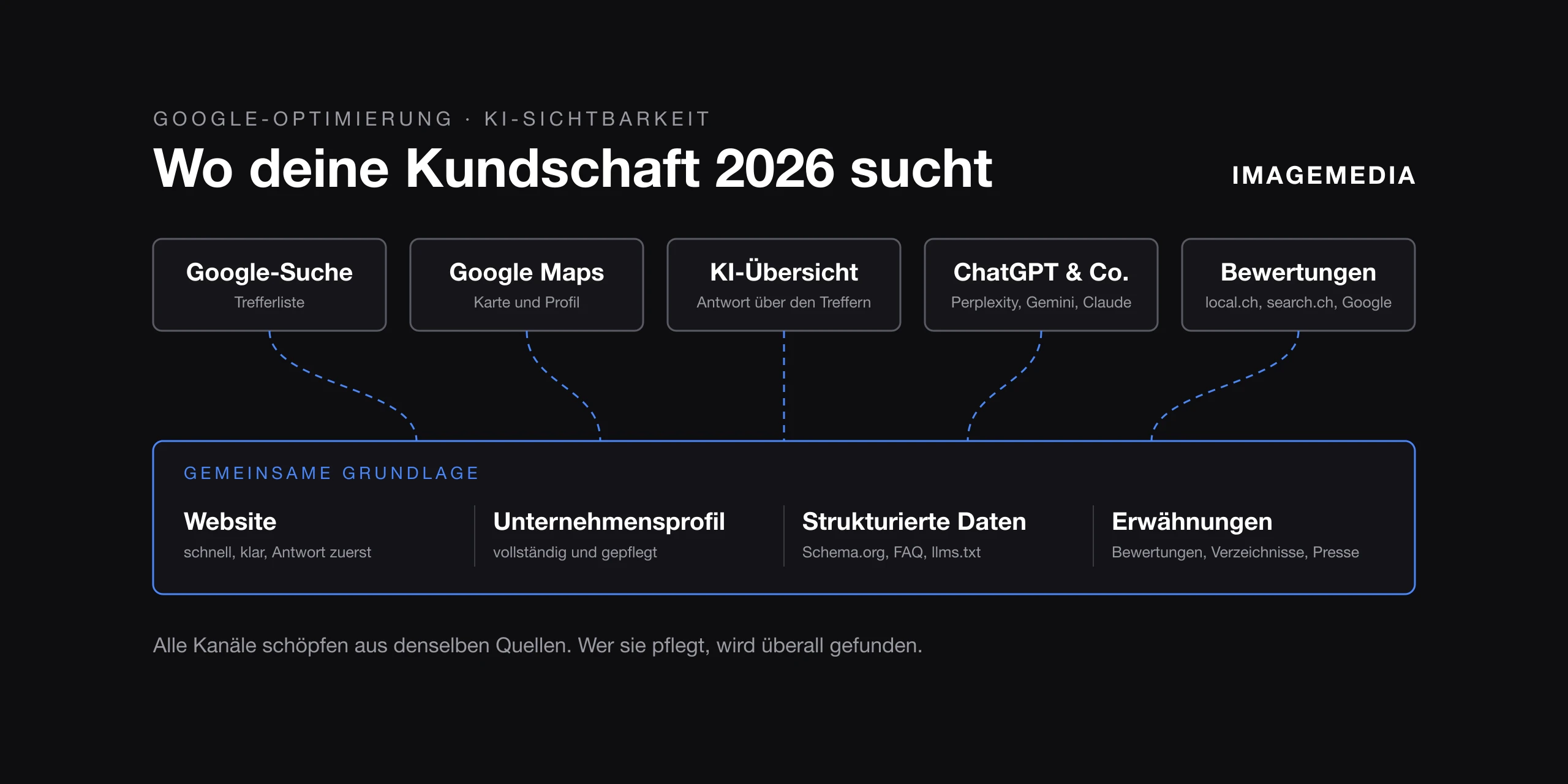
Google optimisation and AI visibility: how your customers find you in 2026
Google Search, Maps, AI Overviews and ChatGPT draw on the same sources. Why Google optimisation is becoming more important, not less, and what to add so AI assistants mention you too.
When nobody googles any more: visibility in AI answers
ChatGPT, Perplexity and Google AI answer questions instead of showing links. Anyone who wants to be mentioned has to write differently.