Guide
Saving energy with a smart home: what really works
A smart home only saves if it controls the big consumers: heat pump, boiler and electric car according to solar power. What works measurably, what is comfort and how to make consumption visible.
"Does a smart home save energy?" is one of the most frequent questions in our consultations. The honest answer: the house only saves if it controls the big consumers. A dozen smart lamps changes little on the electricity bill. A heat pump, a boiler and an electric car running on solar power change a lot.
Where the energy goes in the house
In a detached house with a heat pump, roughly two thirds of electricity consumption goes to heating and hot water, the rest to household and appliances. Add an electric car and it quickly becomes the largest single consumer. Anyone who wants to save must therefore start with heat, water and car – and with the time at which electricity is drawn.
Controlling PV self-consumption
A photovoltaic system delivers most at midday; the house needs most in the evening. Without control, the surplus is fed in at a low tariff and bought back in the evening at the full tariff. An energy manager – integrated in the smart home or as a device from the inverter manufacturer – measures at the house connection whether there is a surplus right now and switches consumers on deliberately. The order is decisive: first the boiler, then the heat pump, then the car, last the battery.
Heat pump and boiler on solar power
The boiler is the simplest storage in the house: water heated to 60 degrees at midday with solar power is still warm in the evening. With heat pumps this runs through the SG Ready interface with two contacts: "switch-on recommendation" and "forced switch-on". The smart home closes the contact when there is a PV surplus, the heat pump raises the flow or boiler temperature by a few degrees and thus stores heat in the building.
Charging station with load management
An 11 kW wallbox draws as much as half a house. Two things need regulating: first, the house connection must not be overloaded – dynamic load management throttles charging when the oven and heat pump run at the same time. Second, the car should charge with solar power as far as possible: the wallbox regulates the power between around 1.4 and 11 kW according to the surplus.
Room-by-room heating
Individual room control lowers the temperature in unused rooms and at night. With radiators the effect is noticeable, with sluggish underfloor heating smaller – there the window contact that switches the heating off while airing, and the absence setting during holidays, pay off most.
Making consumption visible
What is measured gets smaller. A meter at the house connection, one at the heat pump, one at the wallbox, and the figures on the wall panel: with that, residents spot the standby consumption at night, the old fridge in the cellar and the tumble dryer that always runs at the most expensive time. Many Swiss grid operators offer high and low tariffs or dynamic tariffs; a smart home shifts consumers automatically into the cheap hours.
What saves and what is a gimmick
| Measure | Effect |
|---|---|
| Boiler and heat pump on PV surplus | large |
| Wallbox with surplus charging and load management | large |
| Room-by-room control with window contacts | medium |
| Standby switch-off via switched socket | small, but measurable |
| Coloured lamps, voice control | comfort, no saving |
Conclusion
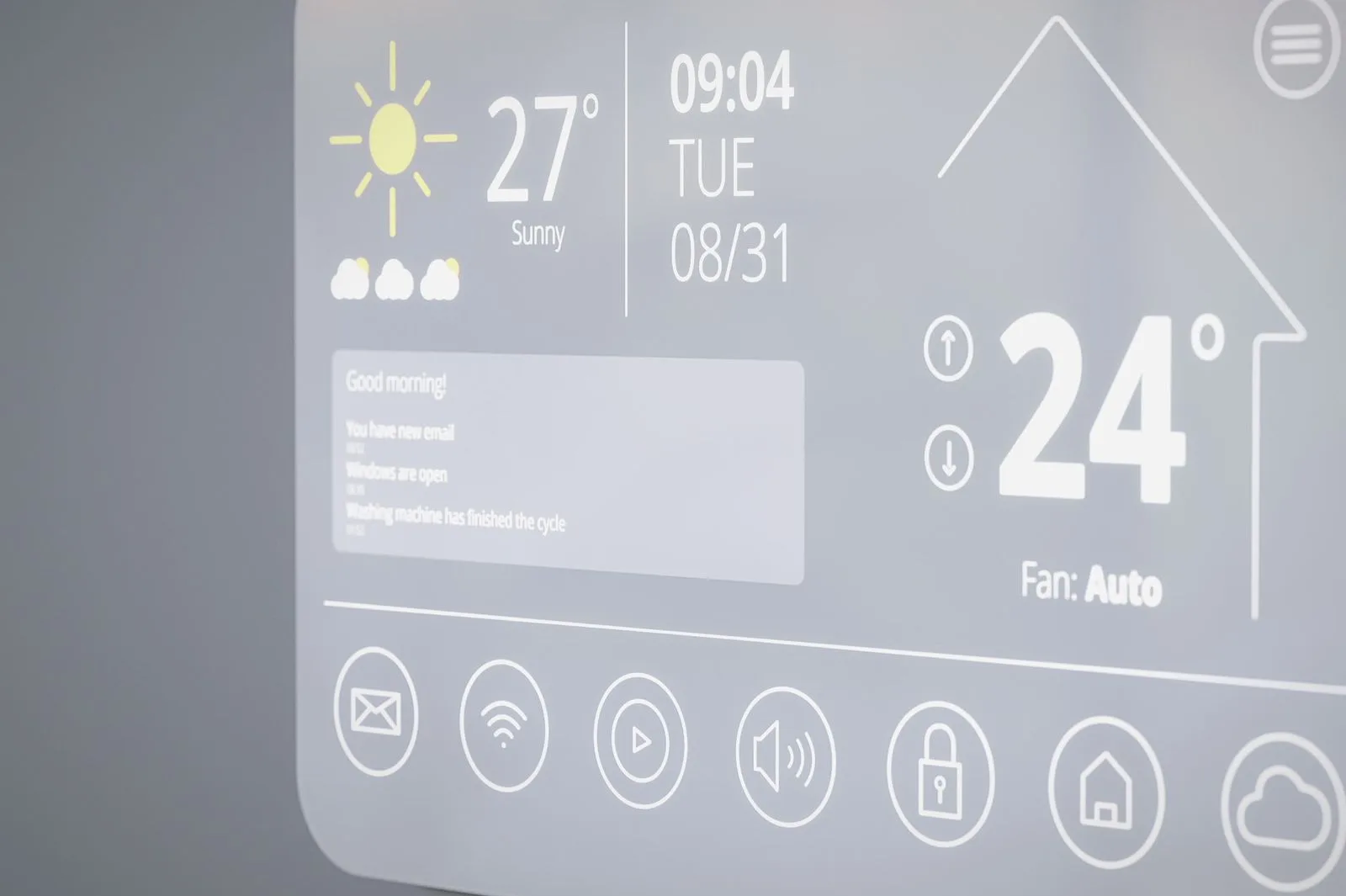
A smart home saves energy when it controls heat, water and car according to the sun and makes consumption visible. Everything else is comfort – legitimate, but not a saving measure. The precondition is that inverter, heat pump, wallbox and smart home talk to each other; we make sure of that in planning. We show you what an energy overview looks like in everyday life.
More articles
News

From X10 to Matter: where the smart home comes from
The idea of a house that thinks along is fifty years old. A short history of home automation – from a Scottish plug socket to a common standard.
KNX explained: the standard that has held for 30 years
KNX is the bus system electrical planners in Switzerland rely on most often. How it works, what it costs and for whom it is the right choice.

Loxone explained: the smart home from a single source
One Miniserver, one manufacturer, one piece of software: Loxone promises home automation without a babel of protocols. What the system can do and where its limits lie.