Conference technology
Hybrid meeting rooms: why the camera is rarely the problem
Since 2020 every meeting is potentially hybrid. The technology for it is mature – the most common problems lie elsewhere.

Before 2020 video conferencing was an exception; afterwards the normal case. What remained were rooms built for those present and retrofitted for those dialling in. Five years later we know fairly precisely what is wrong when a hybrid meeting does not work.
Sound is more important than picture
A poor picture is unpleasant; poor sound ends the collaboration. Anyone who has to ask three times at the other end switches off inwardly. That is why we plan the microphones first: ceiling microphones for rooms with fixed seating, table microphones for long tables, directional soundbars for small rooms. Only then comes the camera.
Room acoustics matter just as much. A meeting room with glass wall, concrete ceiling and stone floor sounds like a gymnasium. A few absorbers in the right place bring more than the more expensive microphone.
One button, not three
The second source of error is operation. If a meeting begins with someone looking for the right cable, the technology was planned wrongly. Two routes have proved themselves: a permanently installed room system that starts at the press of a button with Microsoft Teams Rooms or Zoom Rooms, or a wireless solution such as Barco ClickShare, where guests bring their own computer and have to install nothing.
We have been a certified Barco ClickShare Specialist since 2026 – not because the certificate looks nice, but because we support the devices in the field ourselves.
What a room really needs
- A screen that suits the room depth: rule of thumb is screen diagonal equals room depth divided by six.
- Microphones that cover the whole table.
- A camera that shows the room, not just the head at the end of the table.
- Operation you understand without an introduction.
- A network that has the bandwidth even on Wednesdays at ten.
Three room sizes, three solutions
For the small meeting room with four to six seats a video bar is enough: camera, microphones and speakers in one device, mounted below the screen. Little effort, good result, the most affordable entry.
The medium room with eight to twelve seats needs separate components: a camera with framing control, two to four microphones and speakers that fill the room. Here a permanently installed room system with a control panel on the table pays off.
The large room from twelve seats or with a partition wall is a project: several cameras, ceiling microphones with speaker tracking, audio processor, often two screens. We plan such rooms with floor plan and acoustic assessment.
What operation costs
The technology is one thing, everyday life another. Firmware updates, licences for room systems, occasional recalibration: we reckon on five to ten per cent of the purchase per year. Anyone who plans for that has working rooms in five years instead of a collection of devices at different levels.
Accessibility and data protection
Two points rarely addressed. Real-time subtitles are available in Teams and Zoom and help not only people with hearing impairments but also with foreign languages. And: cameras in meeting rooms need a clear rule on when they run. A room system with a visible status indicator and physical cover creates trust.
More articles
News
Ten years of digital signage: what has really changed
Screens have become cheaper, content more demanding and operation more important than the hardware. A retrospective from installation practice.
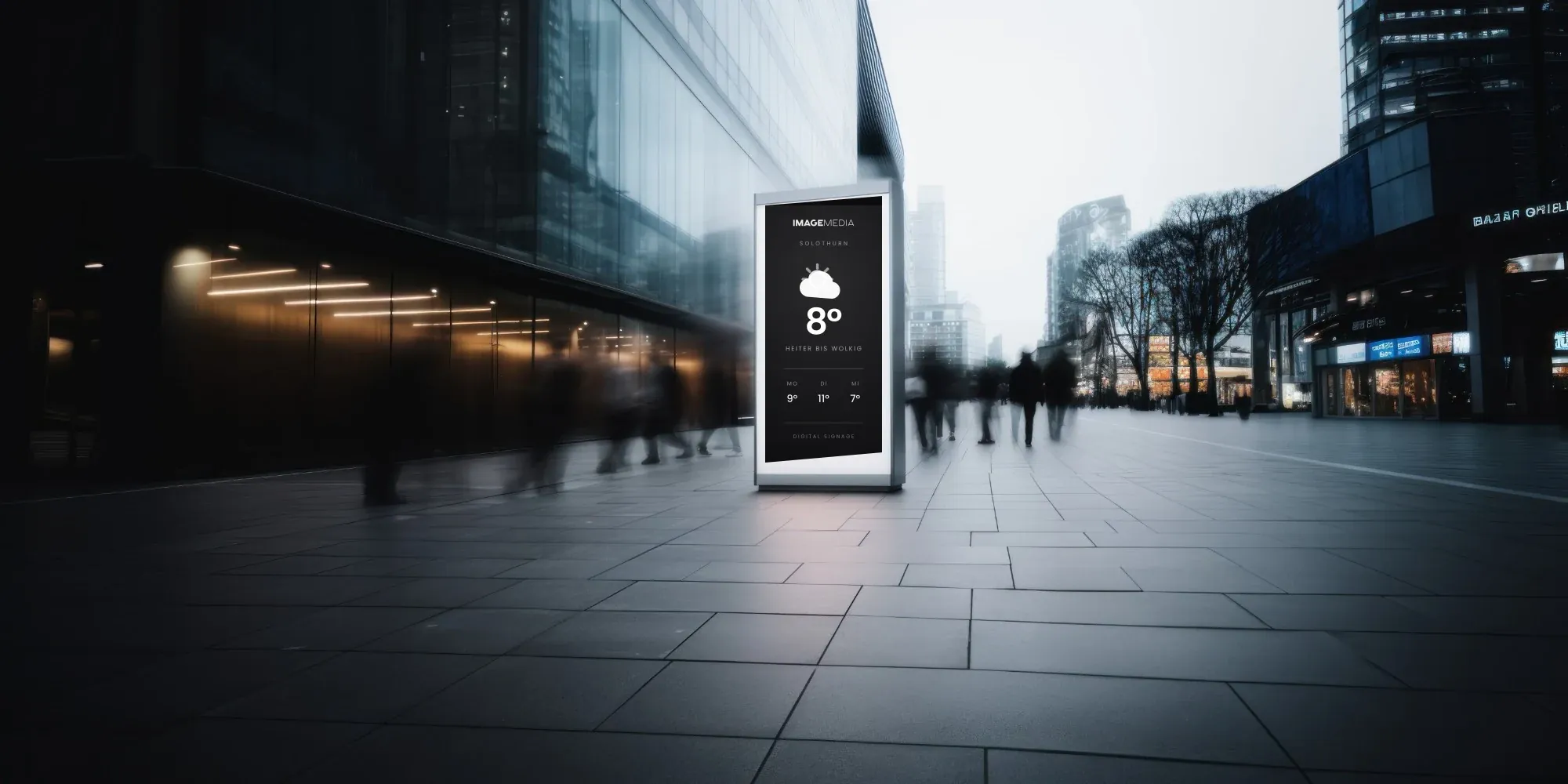
Digital signage in the shop window: how bright does the display have to be?
Sun, reflections and heat behind glass decide whether a shop window display works. What nits mean, which values are enough and what matters for film, power and operating hours.
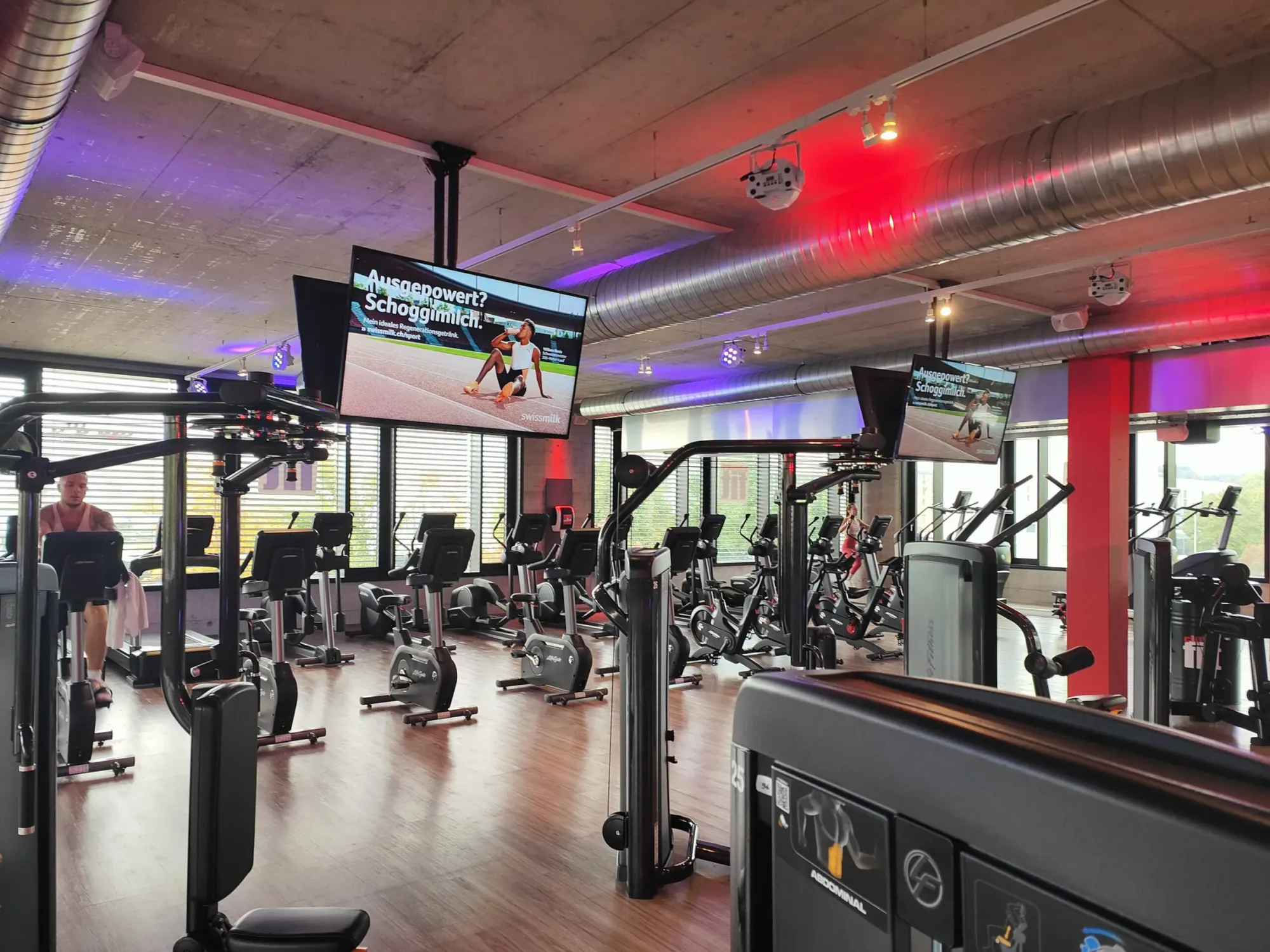
DOOH in the gym: why advertising lands where people wait
Digital Out of Home is growing because attention is where people are waiting anyway. Figures, formats and how a campaign is built.