TV
RGB Mini LED and Micro RGB: the new TV technology of 2026 explained
RGB Mini LED and Micro RGB light LCD TVs with red, green and blue LEDs. What that brings, where the limits compared with OLED lie and which models are available in 2026.
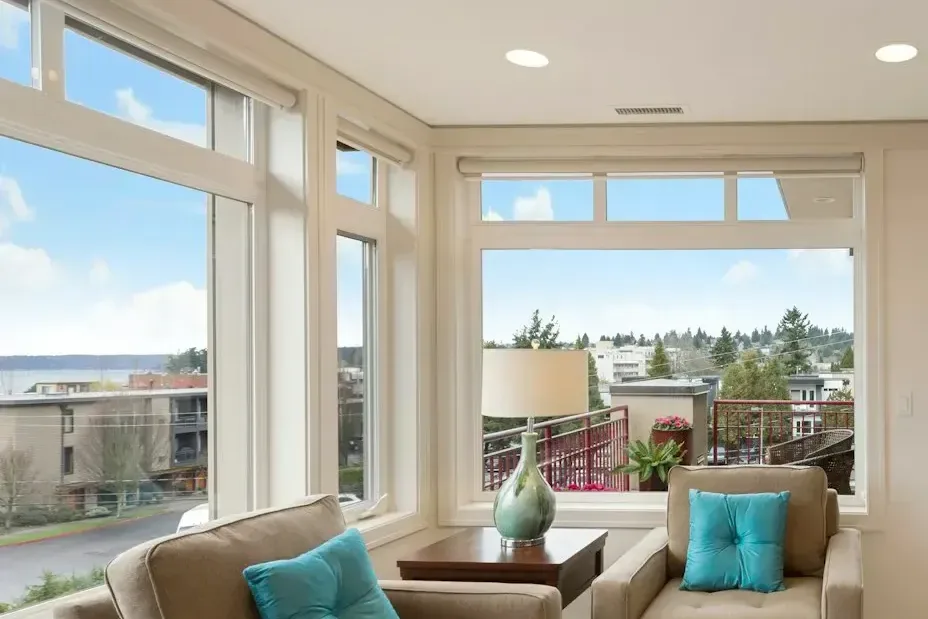
RGB Mini LED is the big new feature in LCD TVs in 2026: the backlight consists of red, green and blue LEDs instead of only blue ones. Above all this brings more colour and a lot of brightness, but the picture remains an LCD with dimming zones. The sets are meant for bright living rooms and very large screen sizes.
What is RGB Mini LED?
An LCD TV does not produce its own light, it is lit from behind. With RGB Mini LED, tiny LEDs in the three primary colours red, green and blue sit there. The manufacturers call this by different names: Samsung and LG speak of Micro RGB, Sony of True RGB, Hisense, TCL and Philips of RGB Mini LED. At its core, they mean the same thing.
What is the difference from Mini LED and OLED?
A normal Mini LED TV uses blue LEDs, and the colours only come about in a layer of quantum dots or phosphor. RGB produces the primary colours directly in the backlight. This brings the sets close to the BT.2020 colour space, a very large colour space. Samsung has the R95H certified by VDE with 100 percent BT.2020.
There is still a clear gap to OLED. With OLED, every pixel lights up by itself and can be switched off individually, while a good LCD has a few thousand zones. According to the specialist portal FlatpanelsHD, an LCD responds at least 100 times more slowly than OLED, has much less contrast and narrower viewing angles. Samsung itself says: OLED has the deeper black, Micro RGB the higher peak brightness and the larger colour space. More on the basic technologies is in the article OLED or QLED.
Which RGB Mini LED TVs are available in 2026?
Until now the technology only came in a few very large models, such as Samsung's 115-inch model from 2025. In 2026 the sizes start at 50 and 55 inches. The table shows the flagship models as of November 2026.
| Model | Sizes | Key data | Availability |
|---|---|---|---|
| Samsung R95H | 65, 75, 85 inches, in Switzerland also 115 inches | 165 Hz, Glare Free matte screen | Switzerland from the end of April 2026 |
| Samsung R85H | 55, 65, 75, 85, 100 inches | 144 Hz, without Glare Free | Switzerland from the end of May 2026 |
| Hisense UR9S | 65, 75, 85 inches | 180 Hz Game Mode, sound by Devialet | launch May 2026, Switzerland not confirmed |
| Hisense UR8S | 55, 65, 75, 85, 100 inches | RGB MiniLED, number of zones not confirmed | launch June/July 2026, Switzerland not confirmed |
| TCL RM9L | 85, 98, 115 inches | up to 16,848 zones depending on size | in shops in Germany |
| TCL RM7L | 65, 75, 85, 98 inches | 1344 to 2880 zones, 144 Hz | in shops in Germany |
| LG MRGB95B | 75, 86, 100 inches | local dimming, 165 Hz | Europe since the end of July 2026 |
| Sony Bravia 9 II | up to 115 inches | 1530 zones on the 75-inch model | worldwide from July 2026 |
| Sony Bravia 7 II | up to 98 inches | True RGB | worldwide from July 2026 |
| Philips MLED981 | 85 inches | 165 Hz, Ambilight | launch October 2026 |
Hz states how many frames per second the TV shows. For brightness, the manufacturers state high figures, TCL for example up to 9000 nits for the RM9L. These are manufacturer figures, and no independent measurements were available at the time of research. For Hisense the figures contradict each other, and Hisense has not confirmed the number of zones. With the two new series, Sony replaces the Bravia 9 and the Bravia 7.
What matters when comparing?
More important than RGB itself is the number of zones. A zone is an area of the backlight that can be made brighter or darker individually. The more zones, the more finely the picture can be dimmed in places. Take care when counting: some manufacturers count each zone three times, once per colour. According to FlatpanelsHD, the 75-inch Bravia 9 II has 1530 zones, which counted three times gives 4590 RGB zones.
- For Samsung, Hisense and the LG MRGB95B, the manufacturers give no confirmed number of zones.
- The LG models MRGB9M and MRGB85B are edge-lit and have no local dimming. According to FlatpanelsHD, they therefore lack the contrast advantage.
- According to FlatpanelsHD, crosstalk between neighbouring colours is possible.
Who is an RGB TV right for?
An RGB TV is right for you if a lot of light falls into the living room during the day and the picture should still look strong. Then there is size: several models are available in 98 to 115 inches.
- Bright living room with large windows. Tips on the room are in the article TV in a bright living room.
- New build or renovation with a large free wall for 98 inches and more.
- Rented flat or retrofit: the TV goes on its stand or on a wall bracket.
- If you watch films in a dark room in the evening, you are more likely to benefit from the deeper black of an OLED.
Limits and requirements
- The technology remains LCD: less contrast and narrower viewing angles than OLED.
- Swiss availability is only confirmed for Samsung. For Hisense, Sony and Philips the launch in Europe is confirmed, for TCL sales in Germany.
- The exact list of sizes for the new Bravia models is not confirmed.
- A large model needs a suitable wall and a bracket for the weight.
What matters for planning and installation?
From 85 inches, the picture becomes very large. Measure the seating distance and the wall before you decide, and check the way through the stairwell. Plan a socket and network cable behind the TV. A new socket is fitted by an electrician. IMAGEMEDIA HOME advises on, plans and installs home TV, smart home and sound in Solothurn, Bern, Biel and the surrounding area. You can book an appointment online.
More on this: TV advice and TV wall mounting.

In person
Philip Fiumi
Managing Director
Questions about Advice?
Write or call. We’ll advise you with no obligation and get back to you within one working day.
More articles
News
OLED TVs 2026: LG G6, Samsung S95H and S99H, Philips OLED+
The 2026 OLED TVs get brighter thanks to tandem panels. The overview shows LG G6, W6 and C6, Samsung S99H and S95H, Philips OLED+ and what Sony and Panasonic bring.
Loewe 2026: antares and vega, the new TVs from Kronach
In 2026 Loewe launched the modular antares OLED range and the compact vega LCD TVs. Sizes, technology, set-up options and which model suits whom.
Laser TV and ultra short throw projectors 2026: Epson, Hisense and XGIMI
Ultra short throw projectors stand right in front of the wall and throw pictures up to 200 inches. What the 2026 models from Epson, Hisense and XGIMI offer and which screen they need.