Retrospective
Ten years of digital signage: what has really changed
Screens have become cheaper, content more demanding and operation more important than the hardware. A retrospective from installation practice.
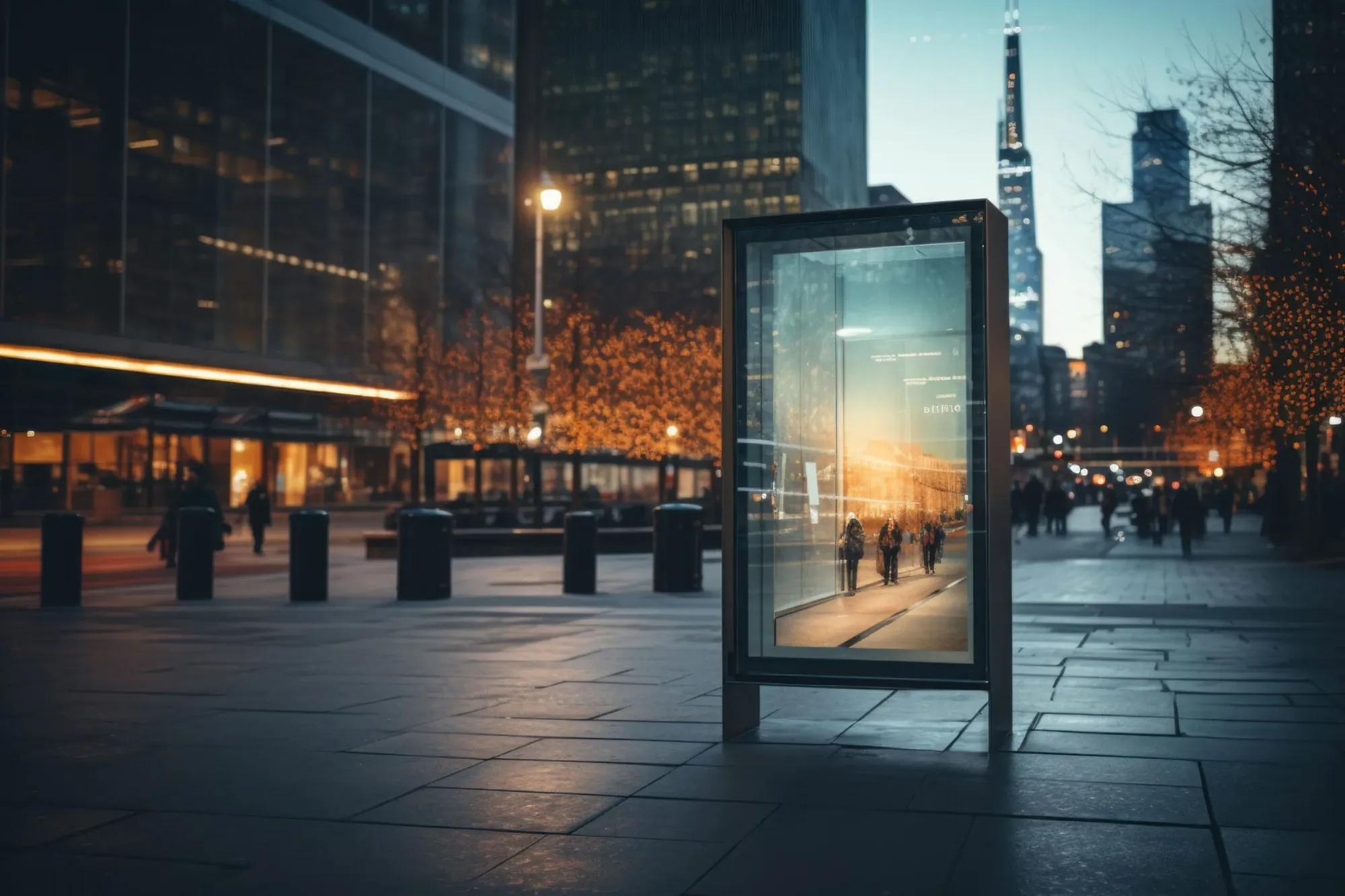
Anyone who wanted to hang a screen in the shop window in 2016 bought a television, plugged in a USB stick and hoped the device would survive the summer heat. Ten years later almost none of that remains – except the hope that it simply works.
Hardware is no longer the problem
Professional displays are available today for a fraction of the former price, withstand 16 to 24 hours of continuous operation and bring the playback software with them. Samsung calls it System on Chip, LG webOS Signage: a computer inside the screen replaces the external player that used to have to be hidden behind the device. That saves not only money but also error source number one – the cable between player and display.
For shop windows a separate calculation still applies: a normal screen has around 350 to 500 candela of brightness, a shop window display 2,500 to 4,000. Anyone who saves here sees nothing on the picture in summer. That is the mistake we correct most often.
Content beats resolution
4K has long been standard, but plays a smaller role in everyday life than you would think. From two metres nobody can tell the difference between Full HD and 4K on a 55-inch set. What matters is what runs: a picture with three words works, a slide with a paragraph of body text does not. The passer-by has between two and three seconds of attention – that is the whole calculation.
Content that changes by itself works best: weather, opening hours, menu of the day, waiting times, free spaces. It is always current and costs no more work once set up.
Operation decides success
The uncomfortable truth: most digital signage installations fail not because of the technology but because after three months nobody maintains the content any more. That is why we clarify before every project who makes the content, how much time that person has and what can run automatically. An installation that runs 70 per cent automatically survives everyday life. One that needs manual work every day does not.
What we do differently from 2016
- We plan the content before the hardware, not after.
- We rely on devices with built-in player and central management.
- We measure the ambient brightness instead of estimating it.
- We build in remote maintenance so that a restart does not need a service call.
- We calculate operating costs over five years, not just the purchase price.
What an installation costs
The most common question in the first meeting. What a single shop window needs depends on display size, brightness class, mount, installation effort and software – we calculate it on the actual window. A branch network with ten sites, central control and content support is a different order of magnitude – we calculate it across purchase and operation, not just the purchase price.
What changes the calculation: the brightness of the device, the accessibility of the mounting point and whether power and network are already there. Retrofitting a socket in the shop window regularly costs more than the difference between two screen sizes.
The three most common mistakes
First, the screen from the electronics store. It is built for four to six hours of use in the living room, not for twelve hours behind glass. After one summer, stains appear in the panel, and the warranty does not apply because the use is not covered.
Second, the orientation. A portrait screen works in a shop window because it matches the format of a poster and meets the line of sight of passers-by. A television mounted in landscape looks like a forgotten device.
Third, missing responsibility. If nobody is responsible for the content by name, last year's opening promotion is still running after four weeks.
What will change in the coming years
Two developments are emerging. Screens are increasingly managed via the manufacturer's cloud services, which simplifies maintenance and creates dependencies – you should know what happens if the service is discontinued. And content becomes data-driven: weather, stock levels, waiting times or sales figures automatically control what is shown. We build such connections today for clients who have inventory management or a booking system in-house.
More articles
News
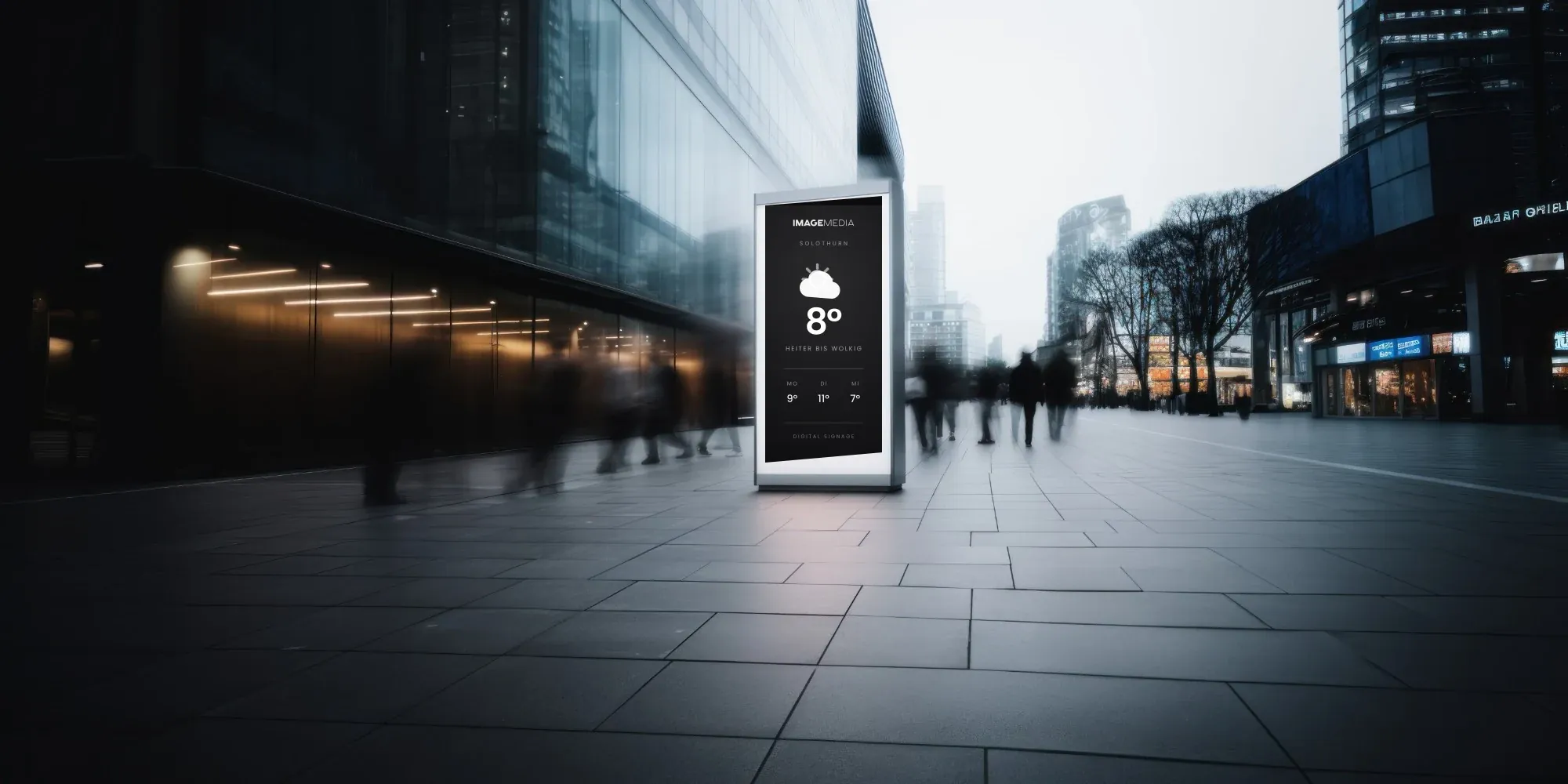
Digital signage in the shop window: how bright does the display have to be?
Sun, reflections and heat behind glass decide whether a shop window display works. What nits mean, which values are enough and what matters for film, power and operating hours.
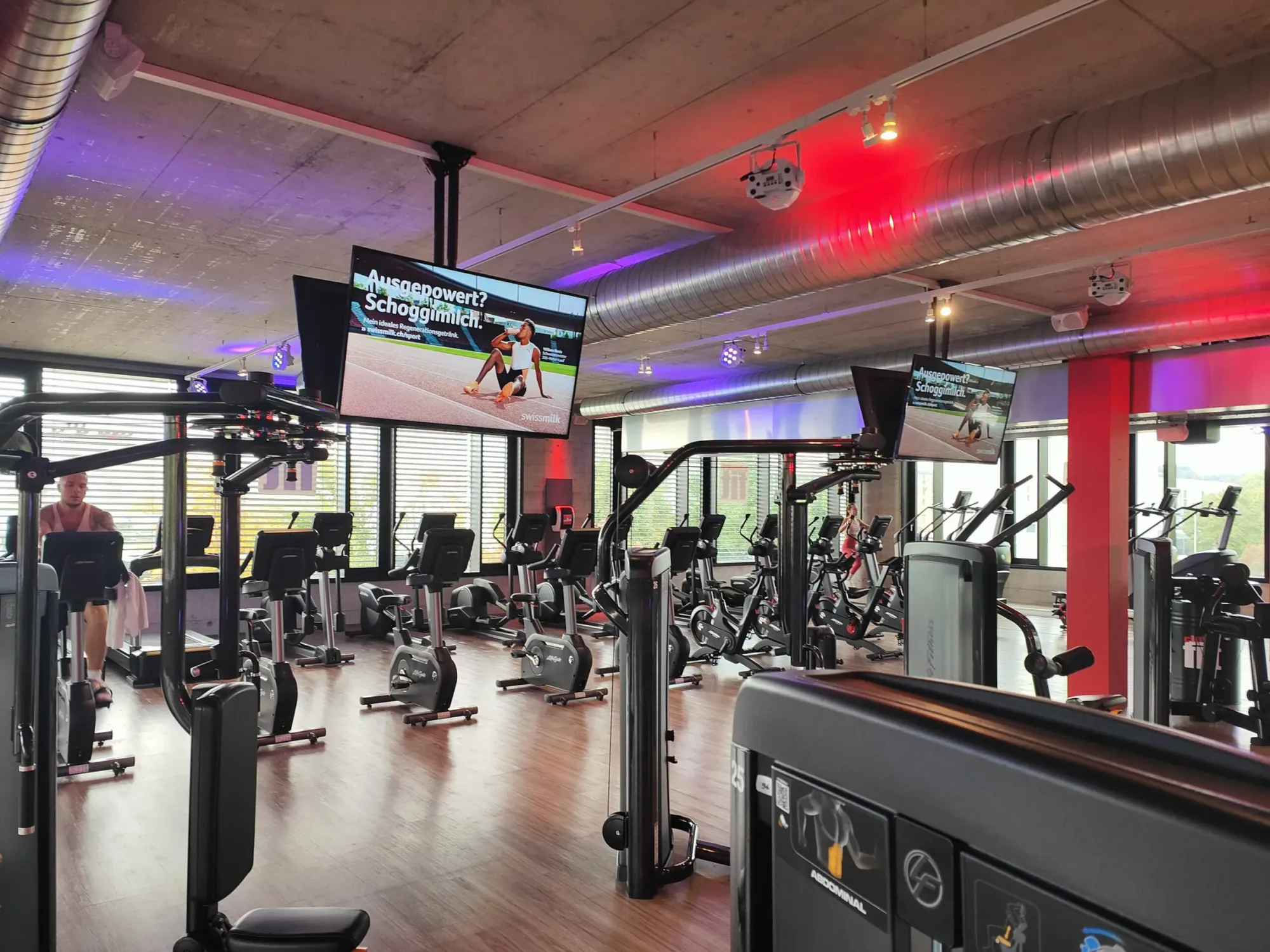
DOOH in the gym: why advertising lands where people wait
Digital Out of Home is growing because attention is where people are waiting anyway. Figures, formats and how a campaign is built.
Waiting room TV: what patients really want to see
A screen in the waiting room can inform or annoy. Which content lands, whether sound makes sense, what data protection demands for patient calls and how practice, pharmacy and municipality benefit.