Practice
Digital signage in the shop window: how bright does the display have to be?
Sun, reflections and heat behind glass decide whether a shop window display works. What nits mean, which values are enough and what matters for film, power and operating hours.
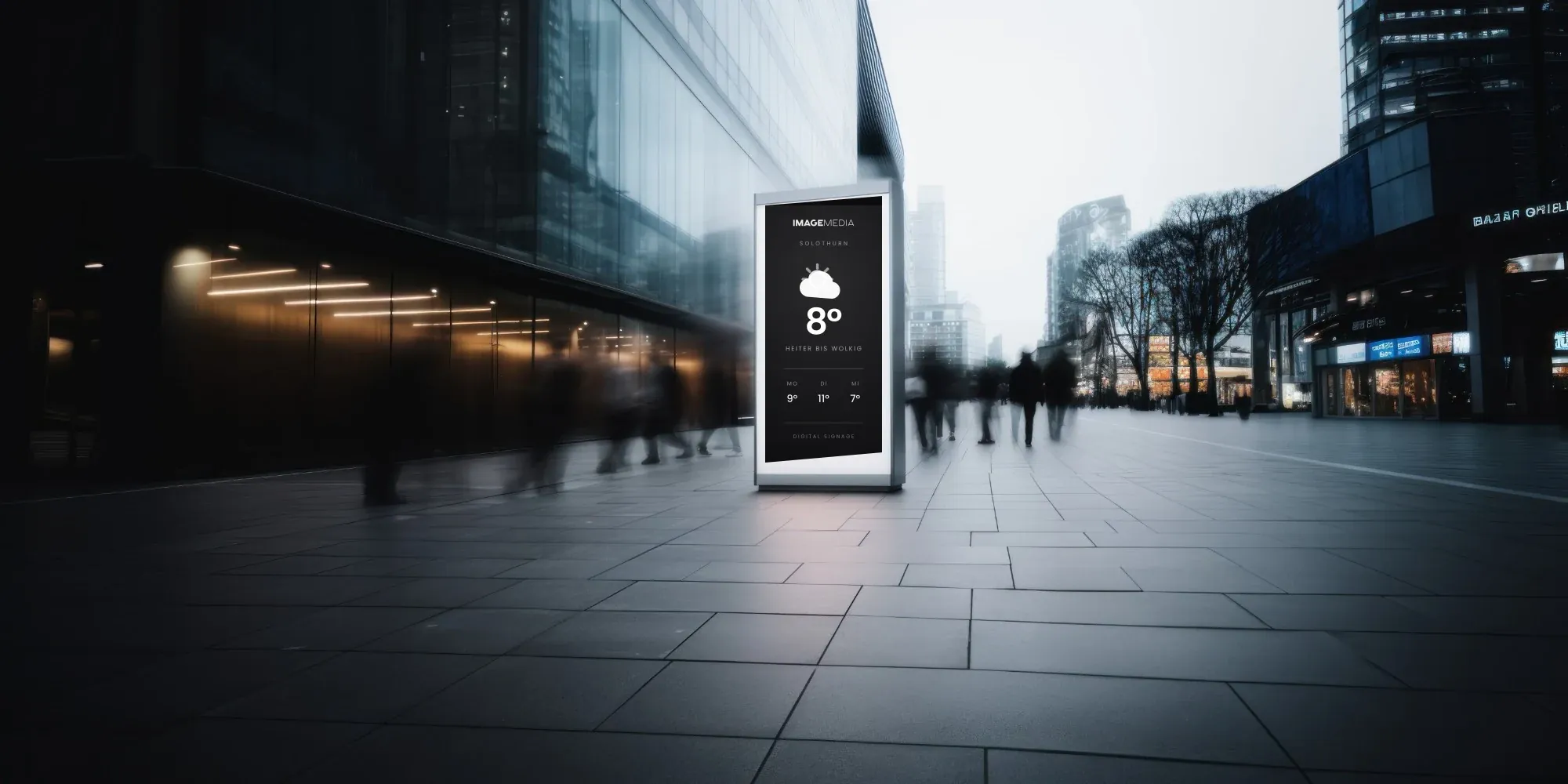
A screen in the shop window does not compete with other screens, but with the sun. What looks brilliant in the shop is often a dark pane outside at eleven in the morning. In consultations clients ask us first about size – the more important number is brightness.
How bright does a window display have to be?
Brightness is given in candela per square metre, in retail usually as nits. A living room television delivers 250 to 400 cd/m², a signage display for interiors 500 to 700. Behind glass with daylight from the side you need at least 1,500 cd/m²; with direct sun on the pane 2,500 to 4,000. Anyone who wants to know precisely measures the illuminance on site with a lux meter: an overcast day brings around 10,000 lux onto the pane, full summer sun over 50,000. For the first value a device with 2,500 cd/m² is quite enough; for the second only a high-brightness display or an LED surface comes into question.
Reflections: the underestimated problem
Even a bright display loses against the reflection of the street if the eye focuses on the pane instead of the picture. Three measures help: an anti-reflective front glass on the device, a slight tilt of three to five degrees downwards and a dark, calm background in the window. Light decoration behind the screen makes it look flatter, not brighter.
Heat behind glass
| Situation | Temperature behind the pane | Consequence |
|---|---|---|
| Shade, air circulating | 30 to 35 °C | uncritical |
| Sun, device close to the pane | 45 to 55 °C | panel dims, fan runs constantly |
| Sun, closed enclosure | 60 °C and more | dark patches in the panel, failure |
Professional window displays are rated up to 50 °C ambient temperature and throttle themselves in heat. A television from the electronics store is specified up to about 35 °C. Keep at least ten centimetres from the pane, leave air above and below and avoid closed cladding. The black patches we often see after the first summer are heat damage – and no warranty covers them.
Power consumption and operating hours
A 55-inch high-brightness display draws 250 to 400 watts at full power, an indoor device about half. At 14 hours a day that comes to 1,500 to 2,000 kilowatt-hours a year. Two levers lower the figure: an ambient light sensor that adapts brightness to daylight, and a timer that switches the device off at night or dims it to 20 per cent. Both also extend the panel's life. Many municipalities – Solothurn and Bern too – regulate in their sign regulations when illuminated advertising has to be switched off; moving images by the road usually require a permit. Ask before installation.
Window film or display?
- Rear projection film on the pane: large picture area, no device in the window, but pale in daytime even with 6,000 lumens. Strong after dark, for restaurants and culture for instance.
- Transparent LED film: bright and expansive, transparency is retained, pays off from several square metres.
- High-brightness display: sharpest picture day and night, clearly limited area, simplest to operate.
We see it every day: anyone who wants to address passers-by in daytime cannot get past the display. Anyone who wants to play the evening hours does well with film.
Conclusion
Brightness from 2,500 cd/m², air around the device, light sensor and timer – with that a window display works for years. We measure the light conditions on site and show how different brightness classes perform in daylight.
More articles
News
Ten years of digital signage: what has really changed
Screens have become cheaper, content more demanding and operation more important than the hardware. A retrospective from installation practice.
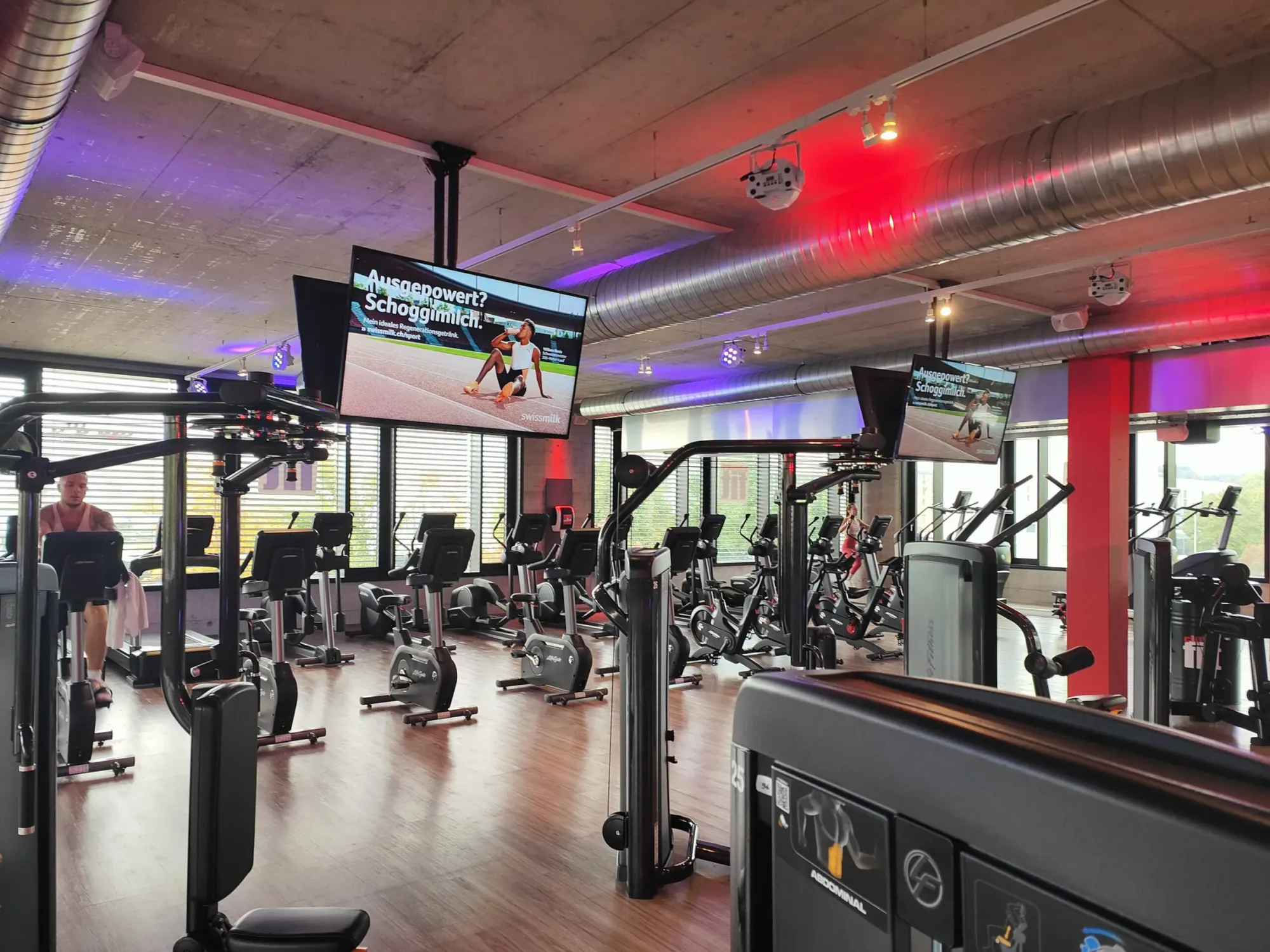
DOOH in the gym: why advertising lands where people wait
Digital Out of Home is growing because attention is where people are waiting anyway. Figures, formats and how a campaign is built.
Waiting room TV: what patients really want to see
A screen in the waiting room can inform or annoy. Which content lands, whether sound makes sense, what data protection demands for patient calls and how practice, pharmacy and municipality benefit.