Comparison
Screen printing, DTF or embroidery: textile decoration compared
Seven processes decorate textiles, and each has its own strength. Which suits your quantity, your design and your fabric – and what survives the washing machine?
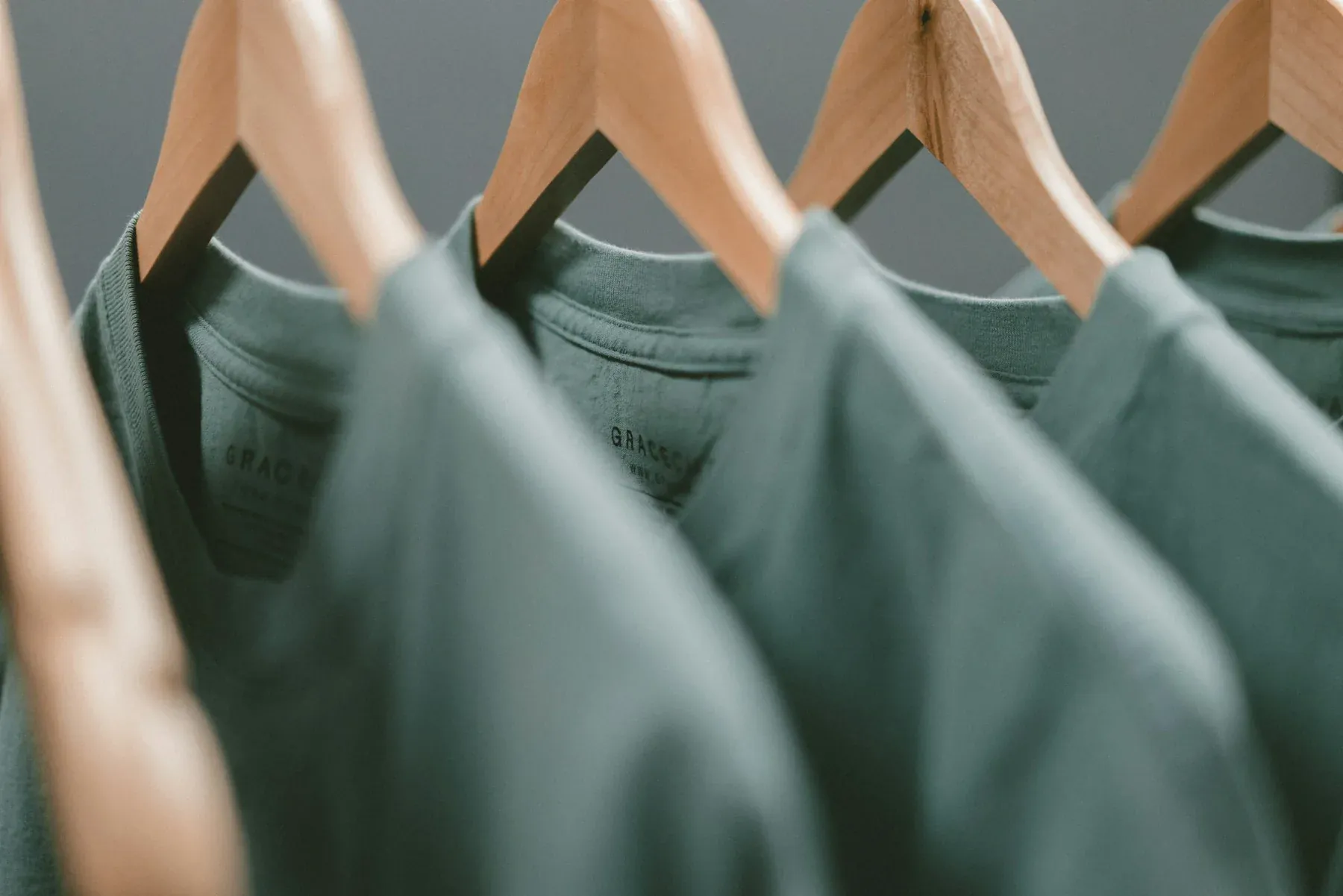
A company logo on a polo shirt can get onto the textile in seven ways. The question is never which process is best, but which suits the quantity, the design and the fabric. We need those three details before we even start calculating.
Screen printing: the reference for larger quantities
In screen printing, ink is squeegeed onto the fabric through a separate screen per colour. The result is opaque, wash-resistant and still strong after 50 washes at 40 degrees. Because a screen is made for every colour, the process pays off from around 30 to 50 pieces and for designs with a few clear colours. A gradient with a photo is the wrong route here.
Digital printing onto textile: DTG and DTF
DTG prints with water-based ink directly into the cotton fibre, similar to an inkjet printer. Fine gradients and photos are no problem, and even a single shirt is possible. On dark textiles a white underbase is needed, plus a pretreatment – the print then becomes somewhat stiffer. DTG demands a high cotton content; on polyester it does not work reliably.
With direct-to-film, the design is printed onto a film, coated with adhesive powder and then pressed on. That works on cotton, blends, polyester and even on softshell and bags. Tiny quantities, many colours, fine details – none of it a problem. The build-up sits lightly on the fabric, which feels less breathable on large designs.
Transfer, flex and flock
Transfer and flex films are cut from a single-colour film and pressed on. For names, numbers and single-colour logos on sports and workwear that is clean, robust and quick. Flock has a velvety, slightly raised surface and looks high-end on simple designs. With many colours the process becomes laborious, because every colour means its own layer.
Embroidery: the highest-quality look
Embroidery is done with thread directly into the fabric. It looks valuable, lasts as long as the textile and suits polos, shirts, jackets, caps and workwear. An embroidery file is created once; after that every repeat is inexpensive. Detail sets the limits: very fine lettering under about four millimetres in height and hairline strokes cannot be embroidered cleanly.
Sublimation: only on light polyester
In sublimation the colour passes into the polyester fibre under heat. The result has no feel at all, lasts indefinitely and can colour the whole surface across seams – ideal for jerseys. The condition is light polyester; on cotton the process does not work.
Quick overview
- Large run, few colours: screen printing.
- Photo on cotton, small quantity: DTG.
- Mixed textiles, small quantity, many colours: DTF.
- Names and numbers: flex or transfer.
- Shirts, polos, jackets, caps: embroidery.
- Polyester sports jerseys: sublimation.
What we need for the data
Ideally a vector file as PDF, SVG or EPS with fonts converted to outlines. For DTG and DTF, pixel data is enough if it has at least 300 dpi at final size and the background is cut out. For embroidery a clean template is enough – we create the embroidery file. Colours are best given as a Pantone reference; on textiles slight deviations remain normal, because fabric colour and material play a part.
Process and textile belong together. Bring the textile you want or let us suggest one – in Solothurn we show samples of all processes side by side, and the question is settled in a few minutes.
More articles
News

Solar window film: when it pays off and when it doesn’t
Too hot in the office, faded furniture, glare on the screen: a solar window film often fixes it in a day. What it does, where its limits are and what we check before fitting.
Latex, UV or eco-solvent: which printing technology for what
Three technologies share large-format printing. The difference is not in the picture but in smell, durability and material.
Sign permits: what applies before façade lettering
In Switzerland almost every façade sign needs a permit from the municipality. Anyone who knows the procedure, documents and deadlines does not lose months over it.