Latex, UV or eco-solvent: which printing technology for what
Three technologies share large-format printing. The difference is not in the picture but in smell, durability and material.
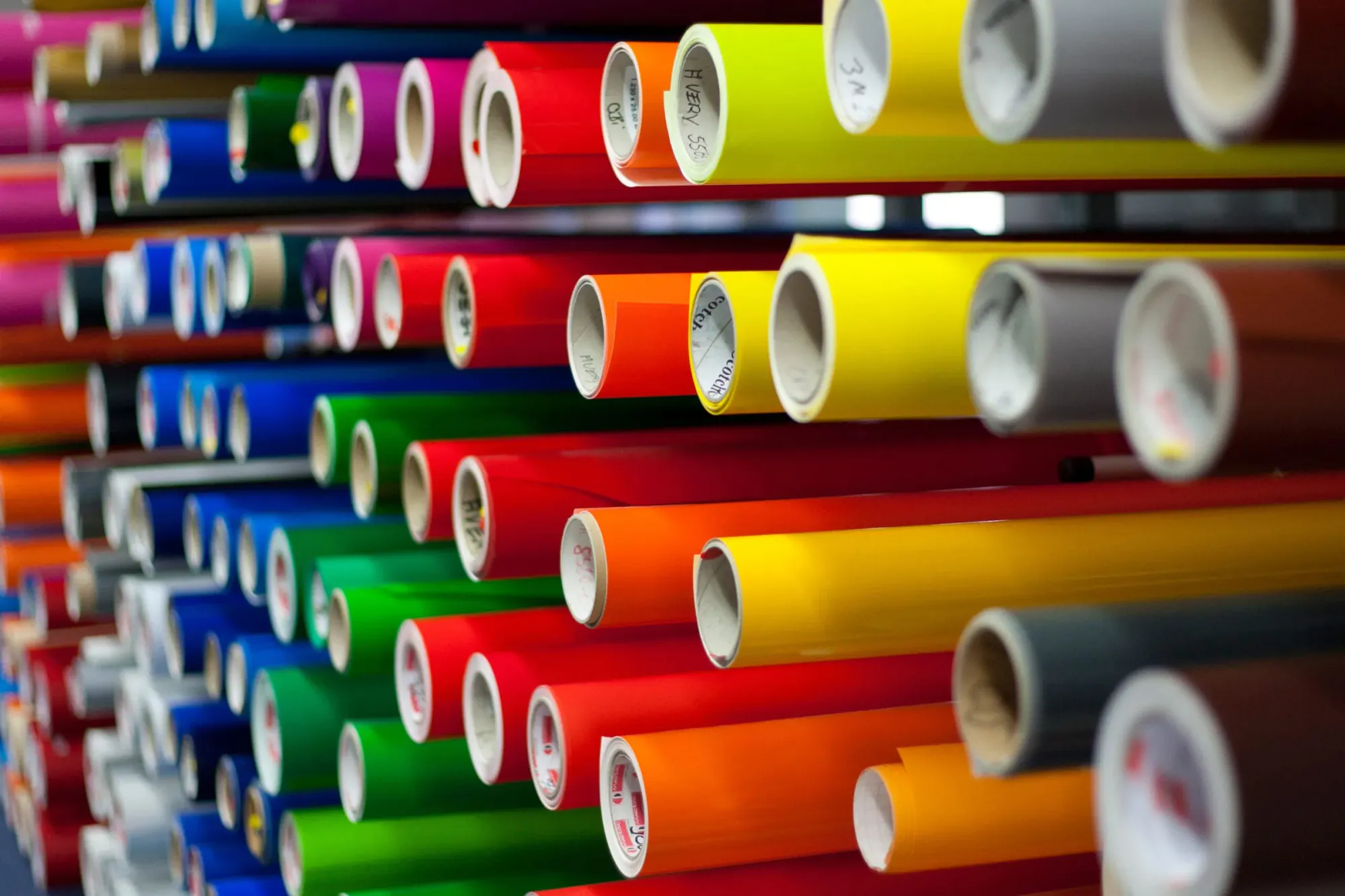
Anyone printing in large format today chooses between three technologies. On the finished poster you can hardly see the difference – in everyday use all the more.
Latex: the standard for interiors
Latex printing uses water-based inks that are dried inside the machine. The print does not smell, can be finished immediately and is harmless for interiors – hospitals, schools and daycare centres regularly demand it. HP made the technology big; several manufacturers now offer comparable machines.
UV: tough, straight onto the panel
UV ink cures under light and therefore adheres to almost anything: acrylic glass, wood, aluminium composite, even ceramics. For direct printing onto panels without lamination it is the only sensible choice. The build-up is minimally tangible, which is even desirable on images with large areas.
Eco-solvent: for outdoors, when it has to last
Solvent ink penetrates the film instead of sitting on top. That makes vehicle graphics and outdoor advertising particularly resistant to weather and cleaning. In return the print needs time to outgas before it is laminated or applied.
What we recommend when
- Roll-up, exhibition wall, indoor poster: latex.
- Direct print on panel, sign, furniture front: UV.
- Vehicle, façade, outdoor banner: eco-solvent with laminate.
- Very short deadlines: latex, because it can be finished immediately.
The material has a say too
The best technology does not help if the material is wrong. For vehicles we use cast films, because they settle into curves without pulling back. For flat surfaces the cheaper calendered film is enough. Anyone who saves here sees it after the first summer.
Resolution: less is more
A common question: at what resolution should the file be delivered? The answer depends on the viewing distance. A poster seen from ten metres needs 30 to 50 dpi at original size – more data does not give a better picture, only longer processing. An exhibition display you walk past demands 100 to 150 dpi. Only what is read from one metre needs 300 dpi.
More important than resolution is the colour space. We work with ICC profiles and, for critical colours, print a proof before the whole run goes through. A corporate red that is right on screen and wrong on the film costs more than the proof.
Finishing decides the effect
The print is half the work. Laminate protects against scratches and UV light, eyelets and hems keep banners in shape, contour cutting turns a rectangle into a shape. Floor stickers need slip-resistant laminates with a test certificate – operators of public buildings regularly demand it.
Sustainability is a materials question
PVC-free films and banners are available today in good quality and can be disposed of by material type. They cost ten to twenty per cent more and are practically equivalent for indoor use. For clients with environmental certification we cost both variants.
More articles
News

Solar window film: when it pays off and when it doesn’t
Too hot in the office, faded furniture, glare on the screen: a solar window film often fixes it in a day. What it does, where its limits are and what we check before fitting.
Sign permits: what applies before façade lettering
In Switzerland almost every façade sign needs a permit from the municipality. Anyone who knows the procedure, documents and deadlines does not lose months over it.

Vehicle graphics: what they cost and how long they last
A lettered van is the cheapest advertising space a business owns. If film, application and care are right.