Print is not dead – but the print run is
Less is printed, but more precisely and to a higher standard. What that means for brochures, mailings and packaging.
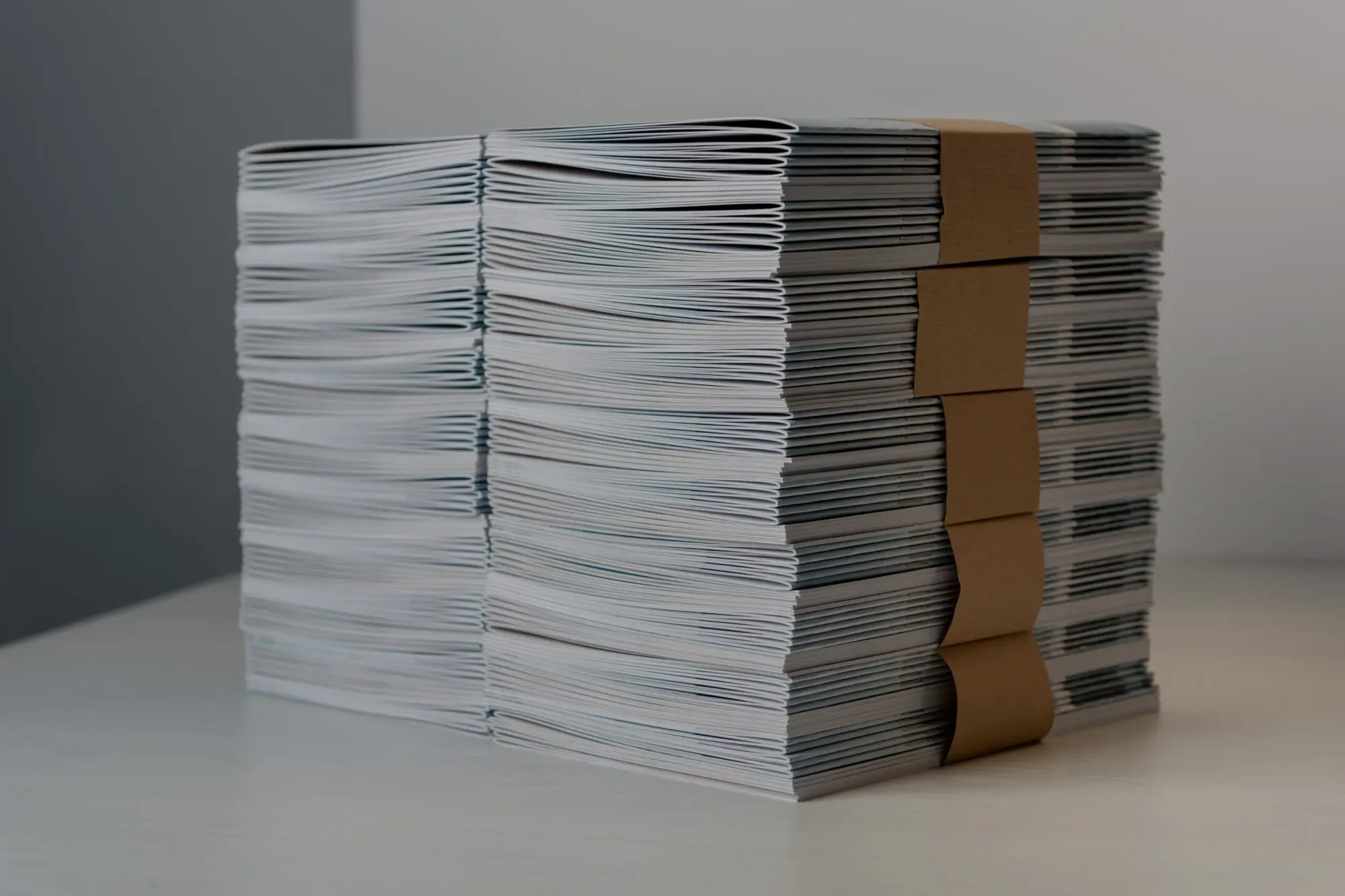
For ten years we have been told print is finished. The figures say otherwise: less paper is printed, but not less often. What has disappeared are the big speculative print runs.
Small runs have become affordable
Digital printing has shifted the threshold at which a job pays off. Printing fifty brochures used to be uneconomical; today it is everyday business. That changes the planning: instead of printing a thousand copies and storing them for three years, you print three lots of a hundred and keep the content current.
Tactility is the argument
What print can do and a screen cannot: be felt. A textured paper, spot varnish, an embossing – that stays in the memory, precisely because it has become rare. For invitations, anniversary publications, premium price lists and packaging that is a real advantage.
What has changed
- Personalisation: variable data printing makes every copy different – name, region, offer.
- Sustainability: recycled papers are white enough today and print cleanly.
- Deadlines: two to three working days are standard, no longer two weeks.
- Link to digital: QR codes work, now that every phone reads them without an app.
Our recommendation
Print complements digital rather than competing with it. A printed mailing to three hundred selected addresses regularly brings more than a broad online campaign with the same budget – if the addresses are right and the piece is any good.
Paper is a decision
The choice of paper has a stronger effect than any design detail. An uncoated natural paper feels crafted, a coated art paper makes colours glow, a textured paper looks high-end even when printed only in black. On every larger job we present samples before printing.
Weights as a guide: flyers from 170 grams, so they do not feel limp. Business cards from 300 grams. Brochure covers considerably heavier than the contents.
Finishing in moderation
Spot gloss varnish on matte paper, embossing, film lamination, coloured edges: each of these techniques costs money and only works if used sparingly. An embossed logo works. Embossing on every element looks like a sample catalogue.
From file to print
Most delays arise with the data. What we need: three millimetres of bleed, fonts embedded or converted to outlines, images in CMYK, spot colours clearly named. Anyone who delivers a file from a word processor gets a preparation from us – that is work, but better than a surprise in print.
More articles
News

Solar window film: when it pays off and when it doesn’t
Too hot in the office, faded furniture, glare on the screen: a solar window film often fixes it in a day. What it does, where its limits are and what we check before fitting.
Latex, UV or eco-solvent: which printing technology for what
Three technologies share large-format printing. The difference is not in the picture but in smell, durability and material.
Sign permits: what applies before façade lettering
In Switzerland almost every façade sign needs a permit from the municipality. Anyone who knows the procedure, documents and deadlines does not lose months over it.