Planning
Dolby Atmos at home: speakers, ceiling and calibration
5.1.2 or 7.1.4, ceiling speakers or upfiring modules, soundbar or receiver? What an Atmos home cinema really needs – and why calibration decides the rest.
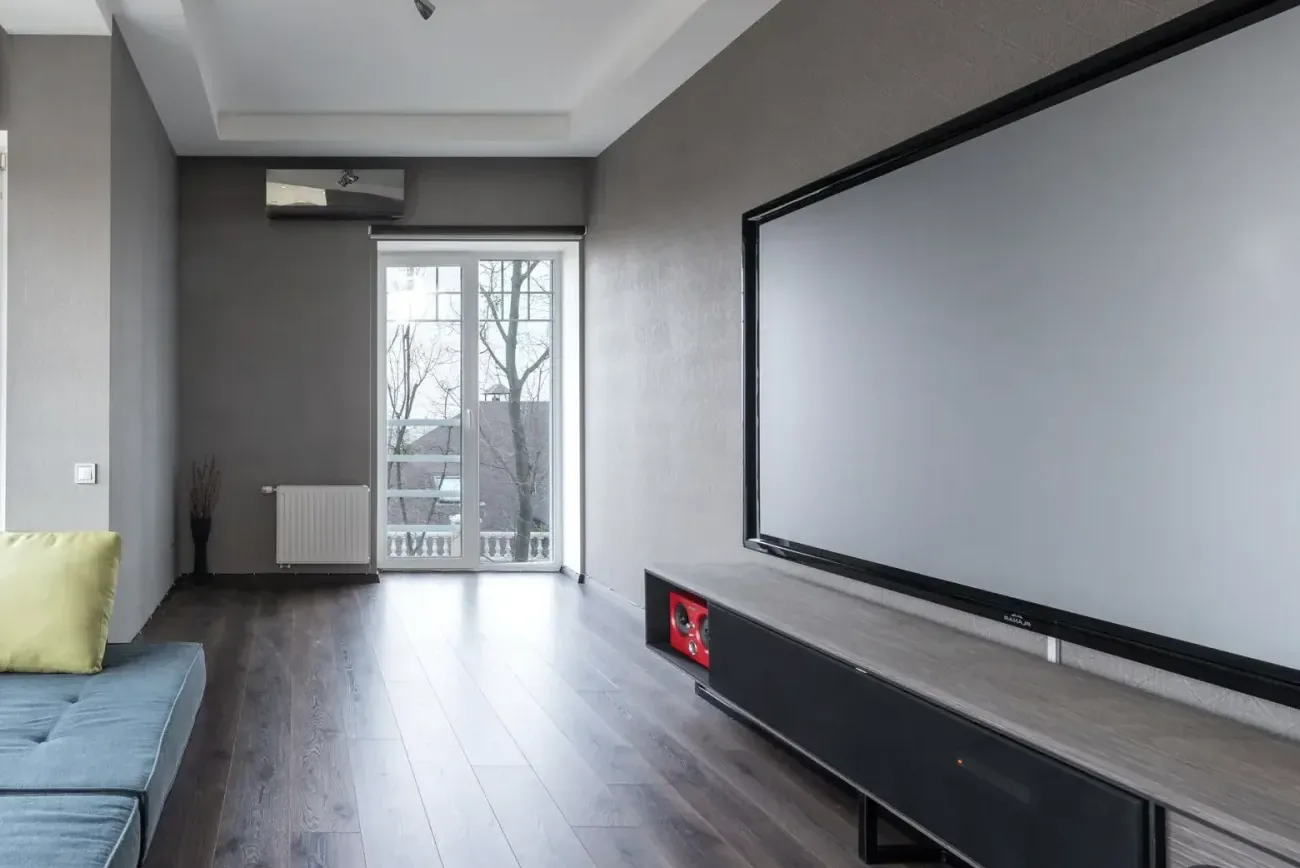
Dolby Atmos is on almost every soundbar box and every receiver. Whether it really works at home is decided by the ceiling, the placement and the calibration.
Which speaker configuration does Atmos need?
Atmos adds height channels to the surround layer; the third digit counts them. 5.1.2 means five speakers at ear height, one subwoofer, two height speakers; 7.1.4 seven, one and four.
- 5.1.2 is the entry point: two height channels at the front are enough for rain, helicopters and music to come from above.
- 5.1.4 is the leap that pays off most: with a pair at the front and a pair at the rear up high, objects move across overhead.
- 7.1.4 needs space: the side speakers sit beside the seats, the rear ones behind. Below around 4.5 metres of room length it rarely brings more than 5.1.4.
Ceiling speakers or upfiring modules?
Atmos sounds cleanest with speakers in or on the ceiling. Dolby recommends the front height speakers at around 45 degrees of elevation in front of the listening position, the rear ones mirrored behind; ceiling heights between 2.3 and about 4 metres work well. With the concrete ceilings of Swiss new builds we work with surface-mounted speakers or a suspended section above the seating row; in timber and plasterboard ceilings in-ceiling speakers are possible with little effort.
Dolby Atmos enabled speakers (upfiring modules) radiate from the front speakers diagonally upwards and use the reflection off the ceiling. That only works with a flat, hard ceiling between about 2.3 and 3.5 metres – sloping roofs and acoustic ceilings destroy the effect, and the sound stays more diffuse. We use them when cables in the ceiling are out of the question.
Soundbars with Atmos
A soundbar with upfiring drivers creates a first height layer via the ceiling; good models with separate rear speakers and subwoofer achieve a credible 5.1.2 or 7.1.4. Soundbars without height drivers compute Atmos purely virtually – that widens the soundstage, real height rarely emerges.
Receiver and calibration
The AV receiver needs as many amplifier channels as speakers are connected: 7 for 5.1.2, 9 for 5.1.4, 11 for 7.1.4.
Calibration decides the rest: Audyssey MultEQ XT32 (Denon, Marantz), Dirac Live (Onkyo, Arcam, NAD, StormAudio) and YPAO (Yamaha) measure every speaker with a microphone at several seating positions, set distances and levels and correct the frequency response to the room. Practical rules: microphone at ear height on a stand, quiet room, six to eight positions around the main seat, then check the crossover frequency – 80 Hz suits most speakers.
Sources and formats
- Streaming (Netflix, Disney+, Apple TV+) delivers Atmos in Dolby Digital Plus at around 768 kbit/s – via eARC from the television or directly from the Apple TV 4K, Fire TV or the console.
- UHD Blu-ray brings Atmos losslessly in Dolby TrueHD, DTS:X in DTS-HD Master Audio. DTS:X works without a fixed speaker grid and uses the same height speakers.
- Auro-3D places the height speakers lower, at around 30 degrees, and has a third layer overhead. Sources are rare; Denon and Marantz decode it.
- Atmos Music (Apple Music, Tidal, Amazon) runs over the same system – a gain as soon as the height speakers are there.
Conclusion
Atmos stands or falls with the height speakers and their calibration. Anyone who can use the ceiling should do so; anyone who cannot is better off with a soundbar with real height drivers than with upfiring modules under a slope. We plan the positions from your floor plan and calibrate the system after installation – in the consultation we compare 5.1.4 and soundbar at your seat.
More articles
News
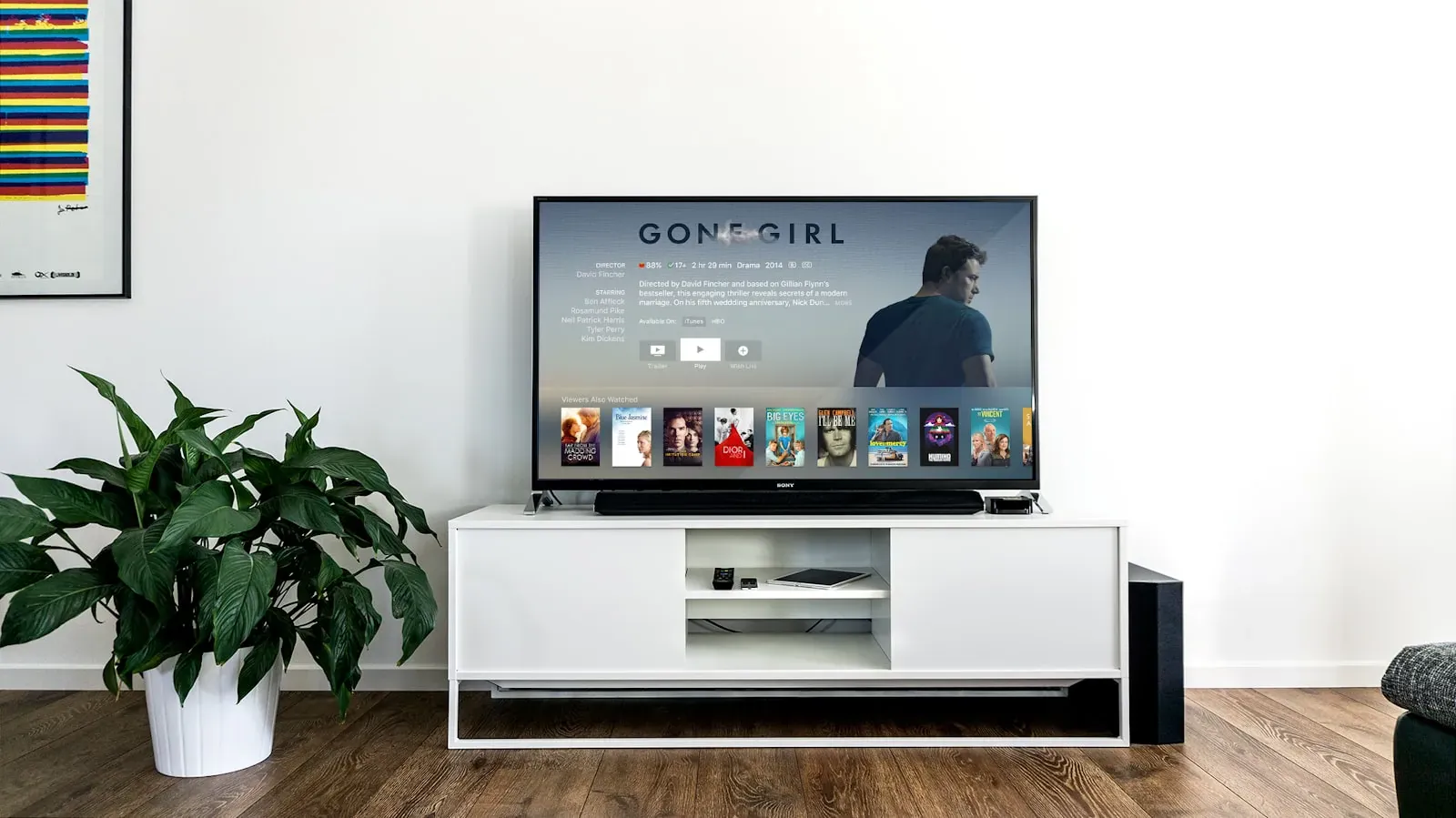
Soundbar or system: what the living room really needs
A soundbar is connected in ten minutes; a system with amplifier and speakers sounds better. When which solution fits – and what lies in between.

Music streaming in hi-fi quality: what you really hear
Spotify, Apple Music, Tidal, Qobuz or Amazon – the services advertise lossless and Hi-Res. What lies behind the formats, where the difference becomes audible and which route brings the music cleanly to the speaker.
Atmos, eARC, codecs, watts: sound terms explained plainly
The audio world loves abbreviations. We explain the terms that come up most often in consultations – and which of them actually count when buying.